
The short answer
They are often sold under one word, but a “clean” and a “wash” are usually different services at different prices. The difference is how much water is used, where the work happens, and how deep it goes.
On-site cleaning
Done in your home, with low-moisture or hot-water extraction. It lifts surface soil in a single visit, and the rug or carpet then dries in place, usually feeling dry to the touch within hours. It is the right choice for wall-to-wall carpet and hard-wearing synthetics, and the wrong one for a rug that needs its dyes tested first.
In-plant washing
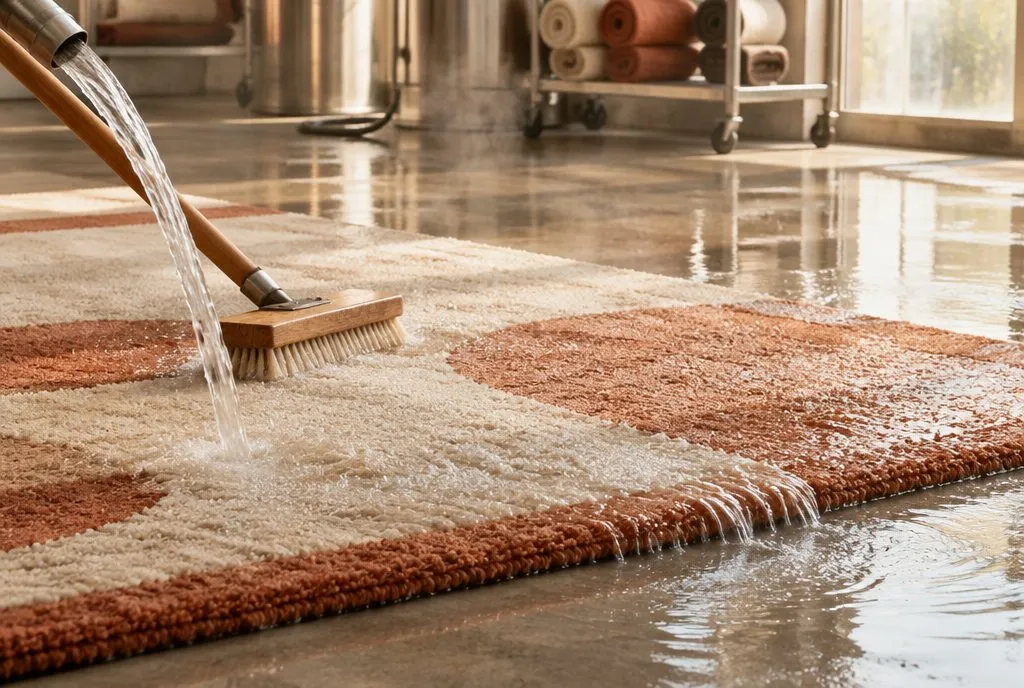
The rug is collected and taken to a plant for controlled cleaning over 5 to 14 days. Wool, including hand-knotted wool, usually gets the full immersion wash: dusted, dye-tested, immersed, rinsed and dried under controlled conditions. Silk and viscose are cleaned at the plant too, but with low moisture instead of immersion, even when hand-knotted, because water can damage them. Either way, the fibres and dyes get more control than an in-home clean can give.
- Dry dusting before any water
- Dye testing to check colours are stable
- Full immersion for wool, low moisture for silk and viscose, then controlled drying
Which your rug needs
Fibre decides the method; construction decides how much risk it carries. Synthetics often tolerate an on-site clean. Wool, including hand-knotted wool, is usually immersion-washed at a plant. Silk and viscose need low-moisture care at a plant, hand-knotted or not: not a home clean, and not the full immersion that suits wool. Identifying the rug first is what avoids most damage.
Why the words matter on a quote
A $180 “clean” and a $420 “wash” for the same rug usually mean different jobs — the first is a surface clean in your living room, the second is dusting, immersion washing and controlled drying at a plant. Ask each company which method its price covers, so you are comparing like with like.