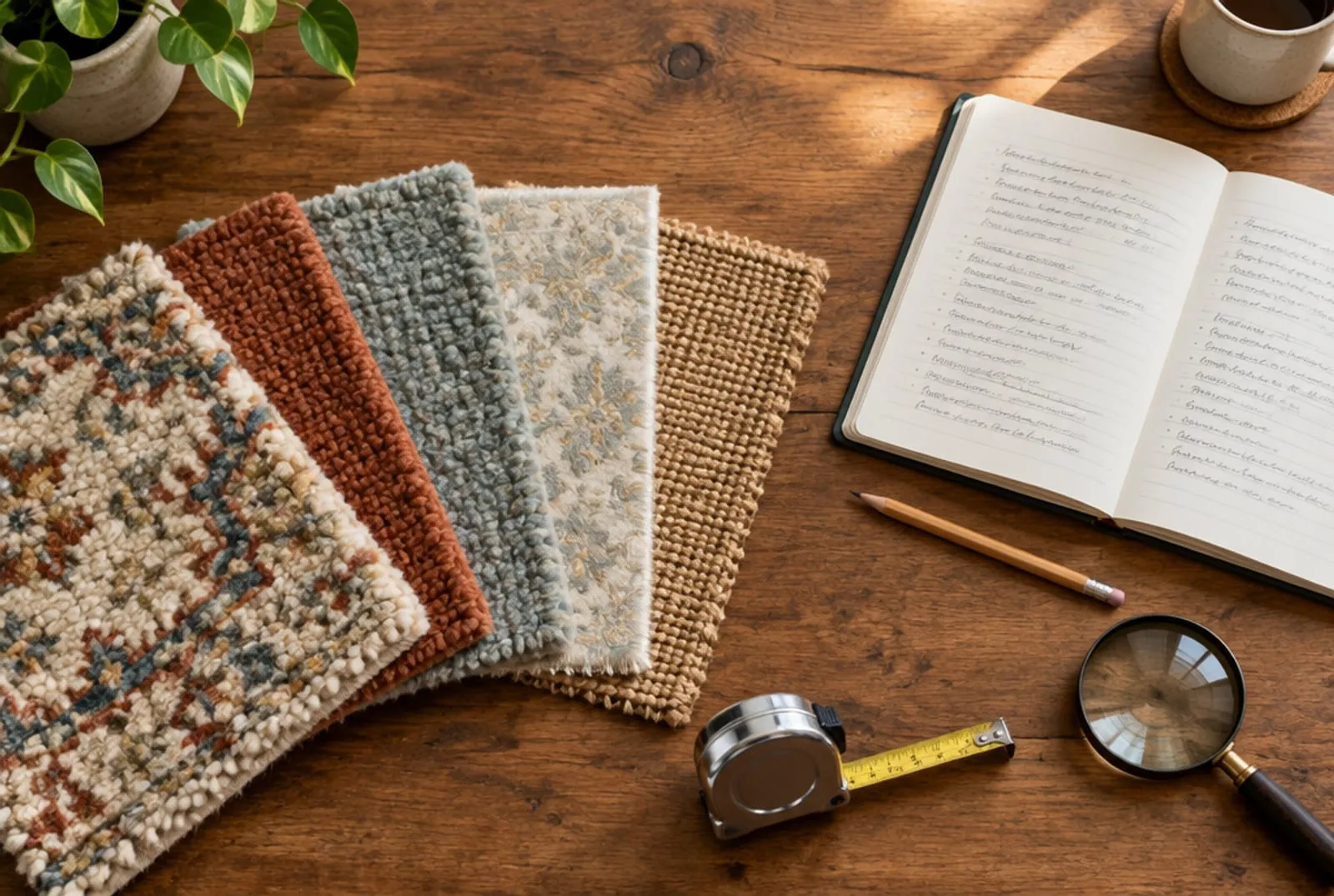
Reporting on the New York City rug cleaning trade — what things actually cost, what changes from building to building, and how to keep a rug alive between washes. Every figure matches the price reference used across the site. For stable reference material rather than dated posts, start with the guides.
Getting a rug or carpet cleaned in New York has always meant guesswork — three companies, three prices hundreds of dollars apart, and no honest way to tell which one is fair. RugRate is our attempt to fix that, and today it is live across all five boroughs.
Certificates of insurance, service elevator bookings and freight hours are the commonest reason a rug cleaning job slips a week in New York. Here is how to clear them first.
Most New York rug cleaners set a minimum charge of $150 to $250. On a small rug, that minimum — not the per-square-foot rate — is what you actually pay.
The two terms get used interchangeably, but they describe different work. One is a surface clean done in your home; the other is a full immersion wash at a plant.
Most NYC “rug cleaning” search results are not cleaners — they are lead-generation sites that sell your job to whoever is cheapest that day. Here is how to tell a real cleaner from a middleman, and what to ask before you book.
Not every rug needs a professional. A fresh spill on a synthetic rug is a job for a towel; a wine stain on a hand-knotted silk is not. The trick is knowing which rug you have before you reach for the water.
There is no single number, because a rug in a shoes-off study and a rug under a dog in the hallway do not age at the same rate. But there is a sensible default, and a short list of things that move it sooner.
A washable rug and a bit of care get you a long way at home. The trick is knowing which rug you have before the water comes out, because the same method that freshens a synthetic rug will ruin a wool or silk one.
A pet accident is a race against time. Caught fresh and treated right, most of it lifts and the smell goes with it. Left to dry, or hit with heat, it sets into the rug and keeps coming back.
Baking soda, white vinegar and dish soap handle a lot of everyday rug messes for almost nothing — on the rugs that can take them. On the wrong rug the same mixtures bleed dye, dull wool and leave a residue that attracts more dirt. Here is what works, and where to stop.
Wool is forgiving in daily use and unforgiving when it gets wet the wrong way. It holds a lot of dry soil before it looks dirty, but heat, harsh chemistry and soaking all damage it. Here is how to keep a wool rug clean day to day, and when it needs a plant.
Most rug stains come out if you reach them fast and treat them right — and set for good if you scrub, heat them, or use the wrong thing. Here is the first response for the stains that happen most, and the honest note on which ones a home cannot fix.
Natural-fibre rugs — jute, sisal, seagrass and coir — are cleaned by keeping them dry. Water is the enemy: it browns the fibre, shrinks the weave and leaves a smell. Almost everything you do for a wool rug is wrong for these.
A shag rug hides its dirt. The long pile looks clean while grit and crumbs collect at the base, out of reach of an ordinary vacuum pass. Cleaning one is less about scrubbing the top and more about getting down to the bottom.
A rug that slides is both annoying and a genuine trip hazard, especially a runner or a rug on stairs. The fix is almost always the same simple thing most people skip — the right pad underneath.
A rug arrives rolled and tight, so it shows up creased and with corners that will not lie down. Most of it relaxes on its own, and a few simple moves speed it along — none of which involve an iron.
A new rug that leaves fluff on the floor and on your socks is usually doing exactly what a new rug does. Shedding is loose fibre working its way out, not a fault — and for most rugs it settles down on its own.
A plain-numbers reference for what rug and carpet cleaning costs in New York in 2026 — the per-square-foot ranges, the minimum charge, and worked examples by fibre and size, drawn from how NYC companies actually price the work.
Most of what makes carpet look tired is dry soil a vacuum can lift, and most of what goes wrong with a home clean is too much water. Get those two things right and you can keep carpet fresh between professional cleans.
Pet urine on carpet is a race, and the finish line is the pad underneath. Caught on the surface and treated right, it clears. Once it soaks through to the pad and subfloor, a spray on top will never reach it.
Carpet stains come out when you reach them fast and match the method to the mess — and set for good when you scrub, heat them, or guess. Here is the first response for the stains that happen most.
Carpet wears from grit, not from looking dirty, so the schedule that keeps it alive is less about how it looks and more about how much walks across it. Here is the sensible default and what moves it sooner.
The two names people use for carpet cleaning describe different jobs. One flushes the carpet and rinses it out; the other cleans the surface and dries quickly. Knowing which is which tells you what you are actually buying.
The first thing to clean on a sofa is not the sofa — it is the tag. One letter on the care label decides whether water will clean your couch or ruin it, and almost every upholstery mistake comes from skipping it.
A stain on a couch has the same rules as a stain anywhere, plus one that comes first: the fabric code. Get that right and you can treat most couch stains the same careful way you would a rug.
A mattress cannot be washed — it can only be surface-cleaned and, above all, kept dry. Soak one and the moisture has nowhere to go, so the whole job is about lifting soil and odour without ever getting it wet inside.
Urine on a mattress is the hardest case of the dry-it rule: it is a protein that needs breaking down, on a surface that must never get wet inside. Done right it clears; done with heat or too much water it sets, or grows mould.
Wet carpet is a race against mould. You have a day or two before mildew sets into the backing and the pad, so the moment carpet gets soaked the job is to get the water out and the air moving — fast.
A sofa or table that sat in one place for months leaves deep dents where its weight crushed the carpet pile flat. The fibres are not damaged, only compressed — and a little moisture and warmth springs most of them back up.
A silk rug is the one you should be most careful with and least tempted to clean yourself. Silk is beautiful and weak when wet: water spots it, the dyes bleed, and the lustre dulls. For silk, knowing what not to do matters more than any technique.
A rug put away dirty, folded or sealed in plastic comes back out damaged — eaten by moths, creased at the folds, or mildewed. Storing a rug well is simple, but every step matters, because the mistakes do not show until months later.
A wool rug can be eaten from underneath while it looks perfect from above. Clothes moths and carpet beetles feed on wool, silk and other natural fibres, and they do their damage quietly, in the dark, under the furniture. Knowing the signs and the prevention is most of the battle.
A sheepskin rug is wool still attached to its hide, and that hide is the catch: heat and hot water stiffen and ruin it, even though the wool itself is washable. Clean one cool and gently and it stays soft; get it hot and it mats and hardens for good.
A flatweave has no pile to hide in, which makes it easy to vacuum and shake clean — and its natural dyes, which bleed at the first sign of too much water, which makes wet cleaning the risky part. Caring for a kilim is mostly dry work plus one careful test.
Microfiber looks like it should wipe clean, which is exactly how people ruin one. Most microfiber is an S-code fabric, so water leaves rings — the trick is cleaning it with a solvent that dries without a mark, then brushing the soft nap back up.
Leather does not follow the fabric rules. It has no cleaning code, it must not be soaked, and the harsh cleaners that work on other surfaces dry it out and crack it. Looking after leather is gentle cleaning plus one step most people forget: conditioning.
Pet hair does not just sit on carpet — it works down into the pile and clings there with static, which is why a vacuum pass leaves plenty behind. The fix is to break the static and lift the hair to the surface first.
A smell in carpet is almost always something in the carpet — a spill, a pet accident, or damp in the pad. A scented spray on top just hides it until it comes back. Getting the smell out means finding the source and treating it, not covering it.
An outdoor rug is the opposite of a delicate indoor one. Most are polypropylene — a synthetic built to shrug off sun, water and mildew — so unlike a wool or silk rug, you can take a hose and a brush to it. There is really only one rule to remember.
A bath mat is one of the few rugs you can usually just throw in the wash — and one of the few that needs it often, because a damp bathroom is where mildew starts. The catch is the rubber backing, which a hot dryer will wreck.
A wet rug is a race against the clock. Clean water turns dirty, dyes begin to move, and within a day or two mould takes hold — so what you do in the first few hours decides whether the rug is saved or lost.
5 min read
Analytics cookies
We count visits without cookies already. Google Analytics would add cookies and tell us more about how people use the site. Your choice changes nothing else, and you can say no. What we collect.