
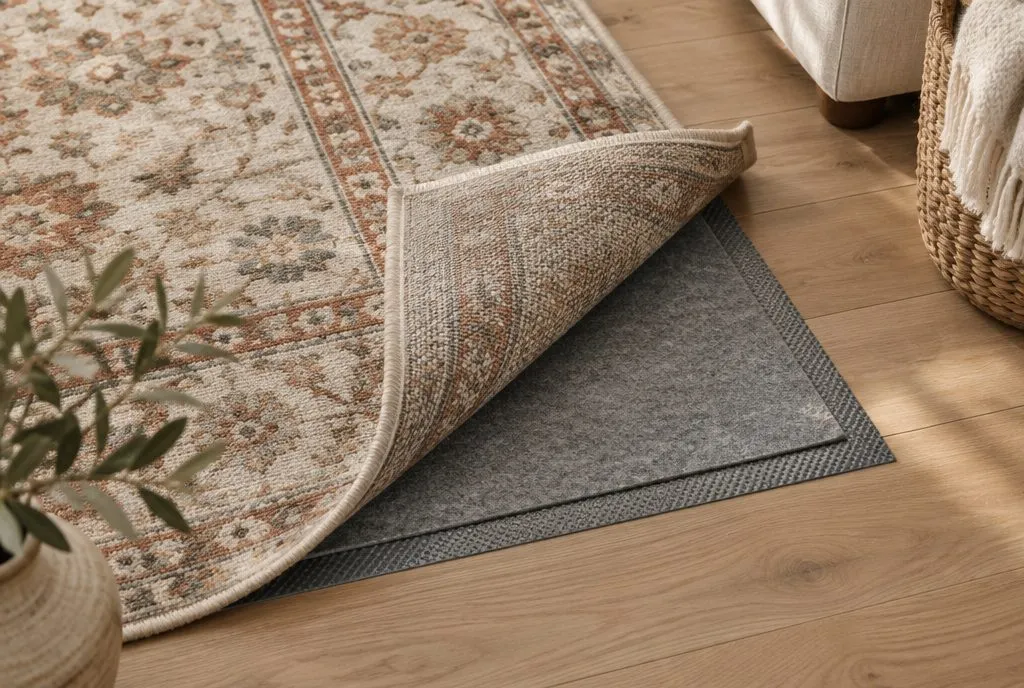
Why rugs slide
On a smooth hard floor there is nothing for the back of a rug to grip, so foot traffic walks it across the room and rucks it up. A thin or backing-less rug slides most, and a rug on top of carpet "swims" on the carpet pile. The slide is not just irritating — a moving rug or a curled, lifted corner is one of the most common household trip hazards.
The real fix: a rug pad
A non-slip rug pad is what actually solves this. The best general choice on a hard floor is a felt-and-rubber pad: the rubber grips the floor, the felt adds grip and cushion, and together they hold the rug still. Cut or buy the pad about an inch smaller than the rug on every side so it stays hidden, and choose a pad that names your floor type — a cheap all-rubber pad can mark or discolour wood and vinyl over time.
Grippers and tape for corners
If the rug mostly stays put but the corners lift, rubber corner grippers or double-sided rug tape hold the edges down and are cheap and quick. Treat them as a smaller fix than a full pad: they stop curling corners and small shifts, but they will not keep a whole rug from travelling on a slick floor the way a pad does.
Rug on carpet
A rug laid over carpet needs a different grip: a felt-and-rubber pad does little on a soft surface, so use a pad made for rug-on-carpet (often a textured or double-sided type) or carpet-specific grippers. These bite the carpet pile below and the rug above so the rug stops wandering.
It protects the rug too
A pad is not only about slipping. By lifting the rug off the floor it lets air move and dust fall through, it cushions the pile against the hard floor so the rug wears more slowly, and it stops the rug and the floor rubbing each other. A good pad is one of the cheapest things you can do to make a rug last.