
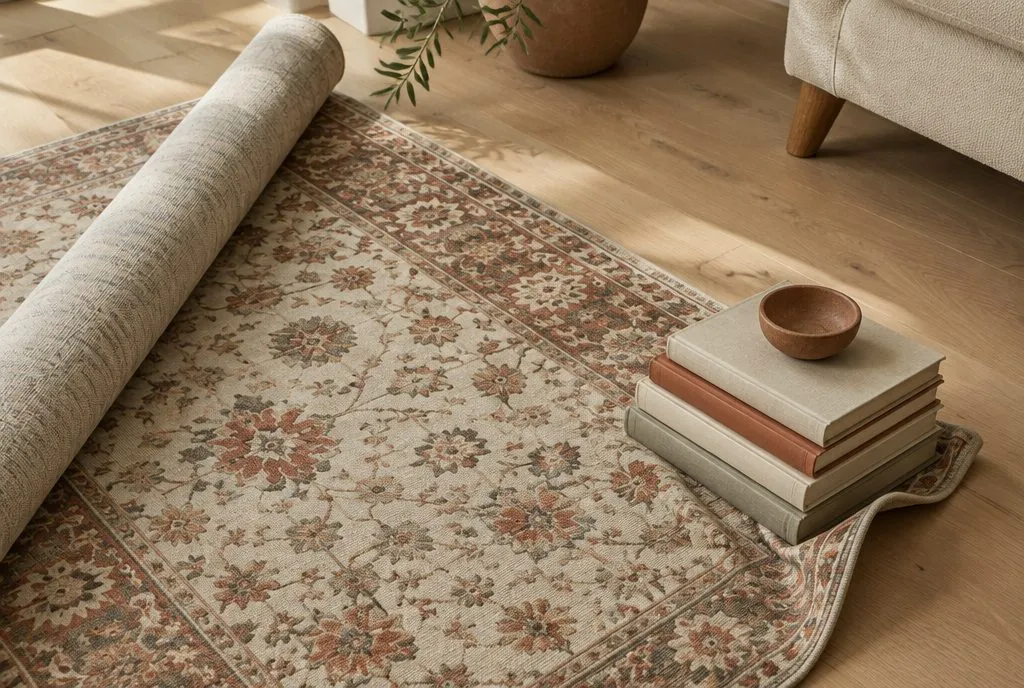
Why new rugs crease and curl
A rug is shipped rolled, often tightly and for weeks, and the backing keeps that shape — so it lands with ridges across it and corners that curl up. It is memory in the backing, not damage, and most of it works itself out as the rug relaxes flat under its own weight and a little foot traffic over the first days or weeks.
Reverse-roll and weigh it down
The fastest cure is to roll the rug loosely the opposite way for a few hours to counter the curl, then lay it flat and weigh down the creases and corners with books or other flat, heavy objects for a day or two. Laying it in a warm room, or in indirect sun for a short spell, helps the backing relax faster. Give it time; forcing a fresh crease rarely beats patience.
Curling corners
Corners are the stubborn part. Weigh them down, warm them gently, and if one keeps lifting after the rest has settled, hold it with a corner gripper or a piece of double-sided rug tape. A curled corner is worth fixing quickly — it is a trip hazard and the exposed edge wears and frays faster.
Stubborn creases
A deep crease that will not drop can take more than weight alone. Reverse-roll that section again, warm it gently with a hairdryer on a low, warm setting held well back, and work the crease flat with your hands, then weigh it. Repeat over a few days rather than forcing it in one go. A rug pad underneath also helps the whole rug lie flat and hold its shape.
What not to do
Keep direct, high heat off the rug. Do not iron it and do not press a hot steamer onto the pile — heat can scorch or melt synthetic fibres, felt wool and distort delicate rugs. Gentle warmth plus weight plus time is what works; anything hotter risks a permanent mark for the sake of a crease that would have dropped on its own.