
Check the back first
Turn a corner over. On a hand-knotted rug the pattern is visible from the back, knot by knot, and the fringe is an extension of the foundation. On a machine-made rug the back looks uniform, often with a glued or stitched-on fringe.
- Pattern visible on the back: hand-knotted
- Fringe sewn on: machine-made
- Stiff, rubbery backing: tufted, glued construction
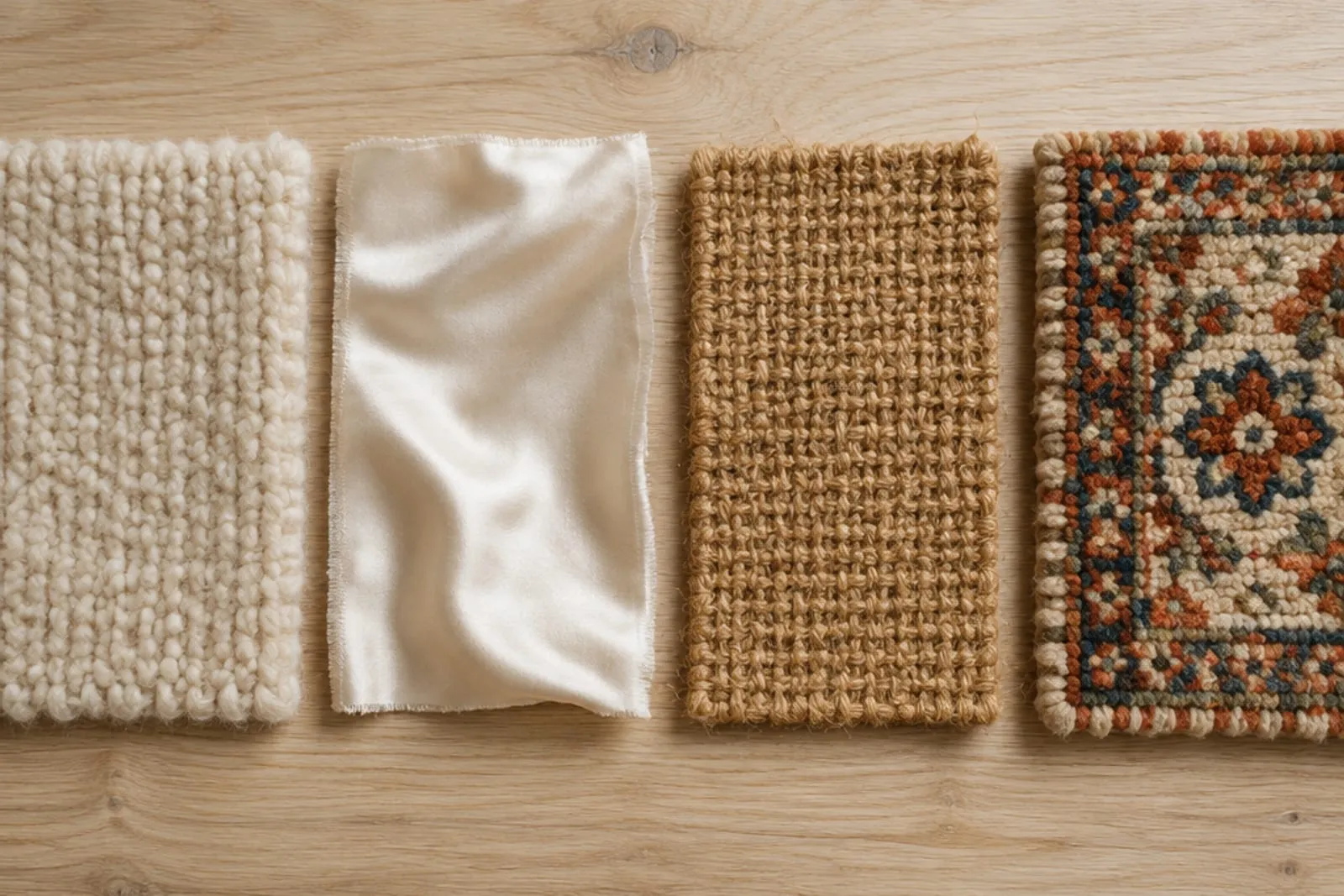
Wool
The most common rug fiber and the most forgiving. Wool holds a lot of dry soil before it looks dirty, which is why dusting matters more than scrubbing. It needs mild, pH-appropriate chemistry: strong alkaline products damage the fiber and dull the colour.
Silk and viscose
Real silk is strong, fine and lustrous, and needs low-moisture cleaning with careful drying. Viscose, sold as art silk, bamboo silk or banana silk, is plant-based, weakens when wet and marks easily. Telling them apart before cleaning avoids most silk disasters.
- Silk: expensive, fine knots, subtle sheen
- Viscose: very shiny, feels cool, yellows and marks with water
Cotton, jute and natural flatweaves
Flatweaves and natural fibers absorb water quickly and can shrink or brown if over-wet. They are usually cleaned with less moisture and dried flat and fast.
Synthetics
Polypropylene, nylon and polyester are hard-wearing and tolerate water well, which is why they are the one category that is often cleaned on site rather than at a plant.