
PureGreen Carpet and Rug Cleaning
- Area rug cleaning
- Oriental and Persian rug cleaning
- Rug repair
- Carpet cleaning
Brooklyn directory
Rug cleaning companies serving every part of Brooklyn, from Greenpoint down to Bay Ridge. Rug cleaning in Brooklyn has one genuine structural advantage over the rest of the city: several of the plants that actually wash New York’s rugs are in Brooklyn’s industrial areas, which means shorter transit, often faster turnaround, and the most competitive in-plant pricing of any borough.
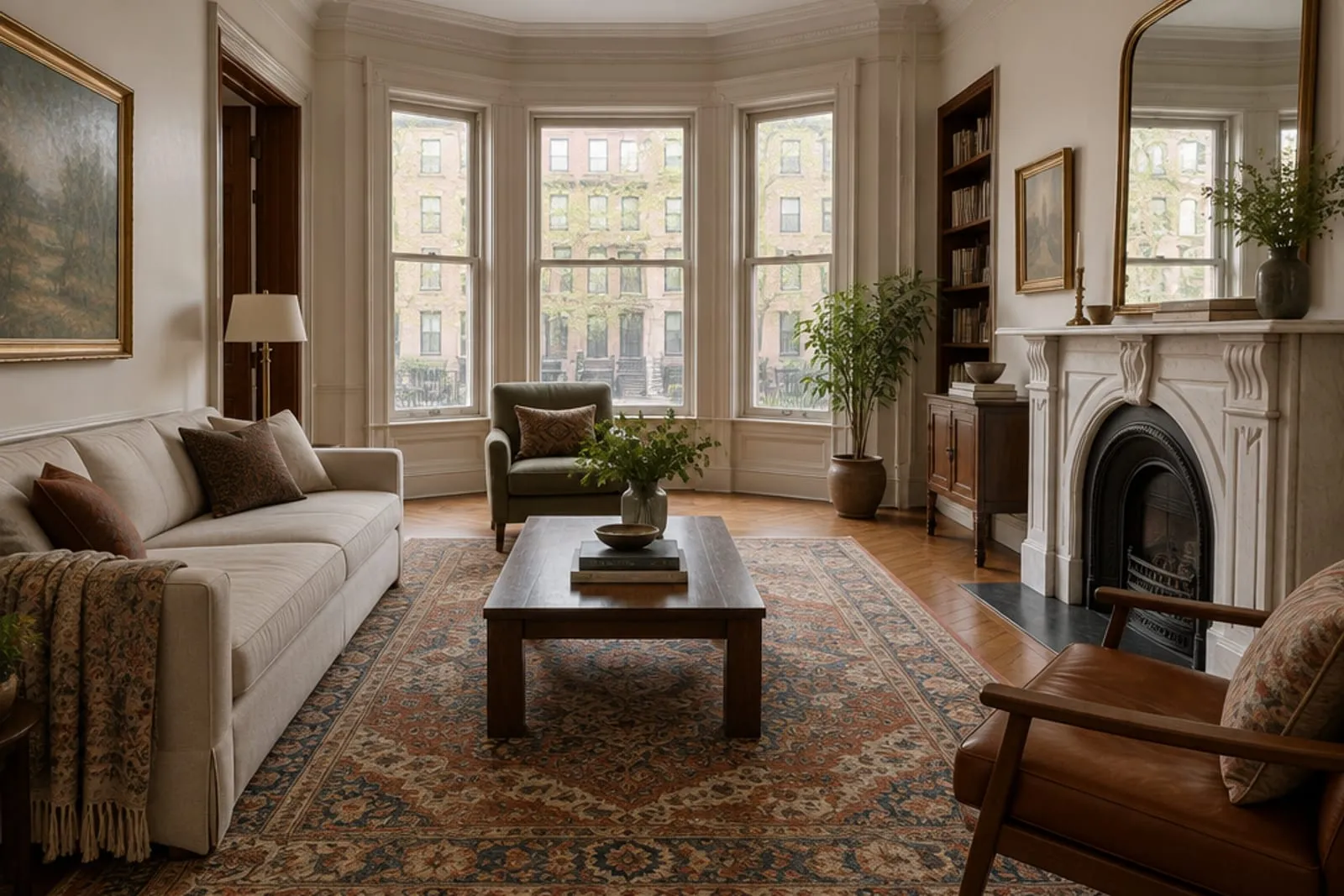
16 companies list Brooklyn in their service area. Compare services and ratings, then ask for written quotes.
Ratings are each platform’s own figures, linked to the listing. Details come from each company’s website; RugRate has not yet verified these companies.
Proper rug washing needs things a dense residential neighborhood cannot provide: floor space for dusting machines, a wash floor with real drainage, and a drying room where large rugs can be dried flat under controlled airflow. That is industrial space, and Manhattan rents make it close to impossible.
Brooklyn has that space, and a good share of the city’s washing capacity sits here — in Gowanus, Sunset Park, Red Hook, East Williamsburg and Greenpoint. Three practical consequences follow.
In-plant washing runs about five to fourteen days almost everywhere, and most of that is drying, which cannot be rushed. But a Brooklyn rug going to a Brooklyn plant skips two bridge or tunnel crossings, which frequently takes days off the total.
Several plants operating in the same borough compete for the same work, and there is no Manhattan storefront rent being recovered in the quote. Expect the middle of the citywide range rather than the top.
This is the question that separates a company with a facility from one that subcontracts. In Brooklyn a good number of them will name an address in the borough — and a shop proud of its plant will tell you about it without being asked twice.
Worth knowing: many Manhattan-branded companies send their work to these same Brooklyn plants. If you live in Brooklyn, you are frequently closer to where your rug will actually be washed than the customer paying more for it across the river.
Brooklyn holds one of the largest concentrations of intact nineteenth-century rowhouses anywhere in the country. Brooklyn Heights became New York City’s very first historic district when it was designated in November 1965, covering some 236 acres and more than 600 pre-Civil War houses. Park Slope, Cobble Hill, Carroll Gardens, Fort Greene, Prospect Heights and Bed-Stuy carry comparable stock.
Where those houses are lived in whole rather than divided into apartments, the arithmetic changes in your favour. A whole brownstone means a parlour floor, a dining room, and bedrooms across several storeys — four, five or six significant rugs under one roof. Nearly every cleaner sets a minimum service charge of $150 to $250 per job.
Brownstone access is straightforward but physical: a stoop, an internal staircase, usually no elevator and no doorman. You need to be home for pickup and delivery, since there is no front desk to receive anything. And you should give your floor number and mention any tight staircase turns when you request a quote, so a stair carry is priced upfront rather than renegotiated at your door.
The paperwork that slows a Manhattan pickup largely does not apply in brownstone Brooklyn. Owner-occupied houses generally have no vendor approval process at all. Where you are in a co-op or a managed building — more common in DUMBO, Williamsburg and the newer waterfront developments — check with your management office, but for much of the borough this simply is not a step.
That difference runs to several hundred dollars, and it is the single most valuable thing on this page for anyone in a brownstone. The trade-off is bare floors for five to fourteen days — if that will not work, split into two batches by floor rather than sending one rug at a time.
The borough is not one place, and the practical experience differs sharply.
DUMBO, Williamsburg and Greenpoint carry nineteenth and early twentieth-century industrial buildings converted to lofts, alongside newer condominium construction. Large open-plan spaces take large rugs, and these buildings were built for freight — loading docks, generous service elevators, professional management. Access is easy; confirm the freight schedule and the rest follows. Newer buildings usually do require a certificate of insurance.
Former industrial and tenement stock, much of it converted, with a mix of walk-ups and loft conversions. Access varies building by building more than anywhere else in the borough. Give your floor when requesting quotes.
Genuinely different from everything above: semi-detached and detached houses, driveways, garages, and street parking that actually exists. Pickup here is closer to suburban than urban — a crew can park outside and carry a rug a few steps. It is the easiest access in the five boroughs, and worth saying so, because people in these houses often assume city rug services are not aimed at them.
Parts of Gowanus and the surrounding low ground carry real flood exposure, and rugs stored in basements there are at risk. If a rug has been wet, timing matters more than anything else.
Brooklyn sits in the middle of the citywide range, and it is the best-value borough for in-plant washing.
| Rug type | Per sq ft | 8×10 (80 sq ft) | 9×12 (108 sq ft) |
|---|---|---|---|
| Synthetic | $3 – $6 | $240 – $480 | $324 – $648 |
| Wool | $4 – $7 | $320 – $560 | $432 – $756 |
| Persian / Oriental | $5 – $8 | $400 – $640 | $540 – $864 |
| Silk | $6 – $10 | $480 – $800 | $648 – $1,080 |
| Antique | Quoted after inspection | — | — |
Minimum service charge is typically $150 to $250, and most companies include free pickup and delivery across the borough.
None of these involve haggling.
Send several rugs at once — one minimum instead of several, plus a volume discount.
Gowanus, Sunset Park and Greenpoint are realistic drop-off destinations for a lot of the borough, and it can save a delivery charge where one applies.
Spring and autumn are peak; the quiet months are when shops negotiate.
This is the standard a company has to meet before it carries a verified badge here, not a claim about companies already listed — verification is being carried out borough by borough.
We confirm business registration and active status; general liability insurance, plus bailee coverage for any company taking rugs off-site; a physical facility address for anyone claiming in-plant washing; actual Brooklyn ZIP-code coverage rather than a claimed service area; and certifications checked with the issuing body rather than copied from a company website.
RugRate takes no payment for placement or ranking, and no company can buy a higher position on this page.
Hand-knotted rugs with natural dyes need colourfastness testing before washing, cold water and controlled drying, because dye bleed is permanent. Wool is the borough’s most common quality rug, washed in-plant with pH-neutral chemistry. Stair runners wear at the nosing and hallway rugs fray at doorways — both common in rowhouses, and both far cheaper to repair than replace. Pet urine has to be flushed from the foundation by immersion at a plant; on-site treatment masks it temporarily.
Compare the same job, not three different scopes
Describe the rug or rooms, access and treatments once, then compare written, all-in quotes.
Brooklyn sits in the middle of the citywide range and is generally the best value of the five boroughs for in-plant washing: roughly $3 to $6 per square foot for synthetic, $4 to $7 for wool, $5 to $8 for Persian or Oriental, and $6 to $10 for silk. An 8×10 wool rug typically runs $320 to $560. Minimum service charges are $150 to $250, and most companies include free pickup and delivery.
Mostly geography. Proper washing needs industrial space — dusting machines, a wash floor with drainage, a controlled drying room — which Manhattan rents make impractical, so a good share of the city’s plants operate in Brooklyn’s industrial areas. Brooklyn customers are not paying for a Manhattan storefront or for two bridge crossings, and several plants in the same borough compete for the same work.
Often, yes. In-plant washing takes about five to fourteen days almost everywhere and most of that is drying, which cannot be safely rushed. But a Brooklyn rug going to a Brooklyn plant avoids two river crossings, which frequently takes days off the total.
Yes — it is the biggest saving available to you. Nearly every cleaner charges a $150 to $250 minimum per job, so sending rugs individually can mean paying that minimum several times over. Together it is usually one minimum, one pickup, and a volume discount worth asking for directly. The trade-off is bare floors for five to fourteen days; if that will not work, split into two batches by floor.
Usually not, which is a real practical advantage over Manhattan. Owner-occupied brownstones generally have no vendor approval process at all. Co-ops, condominiums and the newer waterfront developments in DUMBO, Williamsburg and Greenpoint typically do require one — check with your management office.
Almost all of them, and most include it free across the borough. Confirm coverage if you are at the outer edges — the far south and east of Brooklyn occasionally carry a fee.
Often yes, and it can save a delivery charge where one applies. Gowanus, Sunset Park and Greenpoint are realistic drop-off destinations for much of the borough. Call first — plants are working facilities and not all of them take walk-ins without an appointment.
Say so when you request quotes rather than on the day. A rolled 9×12 is long and stiff and will not bend around a tight landing, and brownstone staircases often turn. Experienced crews carry rugs folded rather than rolled, or bring extra staff, but they need to know in advance.
Both are strong for the same reason — the plants are in both boroughs, so residents of either avoid bridge transit and pay less than Manhattan customers. Judge on cleaning method, fibre specialism and insurance rather than borough. Many companies serve both.
Effectively all of them. Nearly every company here collects across the whole borough, from Greenpoint to Bay Ridge. Browse by neighborhood to see companies with confirmed coverage and existing experience with your building type.