
PureGreen Carpet and Rug Cleaning
- Area rug cleaning
- Oriental and Persian rug cleaning
- Rug repair
- Carpet cleaning
Brooklyn · Prospect Heights
Rug cleaners serving Prospect Heights — from Atlantic Avenue south to Eastern Parkway, between Flatbush and Washington Avenues, in ZIP codes 11217 and 11238. A lot of rugs here are new: the towers around Barclays Center and Pacific Park have put many households into apartments furnished from scratch, and the rowhouses are full of renovated rooms. New rugs come with their own set of questions — why it is shedding, why it smells, and whether the one you bought is what you think it is. Just bought a rug? Start with hand-tufted versus hand-knotted — it determines almost everything else. Comparing shops? See them side by side.

These companies list Brooklyn in their service area. Confirm they cover your Prospect Heights address when you call.
Ratings are each platform’s own figures, linked to the listing. Details come from each company’s website; RugRate has not yet verified these companies.
If you have bought a rug recently, this is the most useful thing on this page. It determines how long the rug lasts, whether it sheds, whether it smells, and whether it can be properly cleaned — and most buyers have no idea which one they own.
Hand-knotted rugs are made by tying individual knots onto warp threads on a loom. There is no adhesive anywhere in the rug. It is slow, skilled work, and the result lasts generations and can be washed, repaired and rewoven indefinitely.
Hand-tufted rugs are made by punching yarn through a stretched backing cloth with a handheld tufting gun. The loops are held in place with latex adhesive, and a second fabric backing is glued over it. It is far faster to produce and far cheaper.
How to tell, in five seconds: turn a corner over and look at the back.
Why it matters:
Shedding. Hand-tufted rugs shed far more, and for longer, because the cut pile is held by adhesive rather than knotted into the structure.
Smell. The latex adhesive off-gasses, and that is the source of most complaints about a new rug that "smells of rubber" or worse. It usually fades over weeks, but it is a hand-tufted characteristic.
This is the important one. Latex adhesive degrades. Over roughly ten to twenty years it dries out, becomes brittle and begins to crumble — you will see a fine powder on the floor beneath the rug. At that point the rug is effectively at the end of its life: the pile is no longer securely held, and there is no economical repair. A hand-knotted rug of the same age is barely middle-aged.
Hand-tufted rugs can be cleaned, but they need care — excessive water can accelerate the breakdown of the adhesive layer, so a good shop will use a gentler, controlled approach and will tell you if a rug is near the end. Any cleaner who takes a crumbling hand-tufted rug and promises a full restoration is not being straight with you.
Price. Hand-tufted should cost a fraction of hand-knotted. Because most buyers cannot tell the difference, a lot of people pay hand-knotted money for hand-tufted rugs. Check the back before you buy, not after.
None of this means hand-tufted is bad. It is a reasonable choice for a rug you expect to keep for ten years, in a room where you want a specific look at a sensible price. It is a bad choice if you are told it will last a lifetime, or if you are paying as though it will.
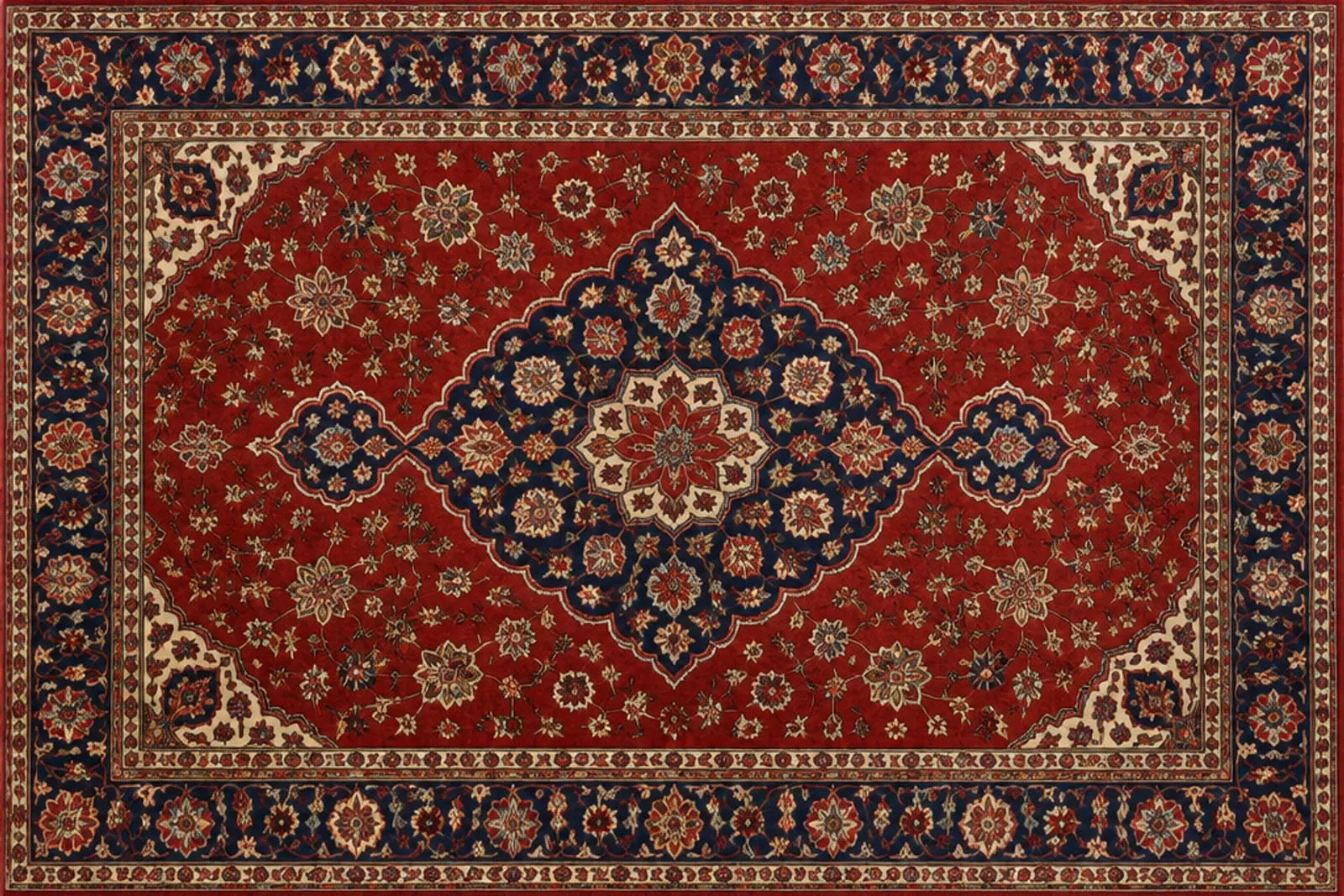
It is normal, and it stops. A new wool rug — hand-knotted or hand-tufted — sheds loose fibre left over from manufacturing. It is not the rug falling apart, and it is not a fault.
How long: typically a few weeks to a few months of noticeable shedding, tapering off. Hand-tufted rugs shed more and for longer. High-pile and shag rugs shed most of all.
What to do
When it is not normal: if shedding is still heavy after six months, if you see the backing through the pile, or if fine powder rather than fibre is appearing underneath, that is degradation rather than shedding — most likely latex breakdown in an older hand-tufted rug.
New rugs smell, and it usually passes. Three different sources
Air and time. Unroll the rug, ventilate the room well, and if you can, air it flat somewhere out of direct sun for a day before it goes down. Do not use scented sprays — they mask rather than remove, and some leave residue that attracts soil.
Not straight away. A new rug does not need washing, and washing it early achieves nothing. Wait one to three years unless something happens — a spill, a pet accident, a move, or a renovation. After that, settle into a schedule: every three to five years in a normal household, every one to two with children or pets.
If the rug came to you secondhand rather than new, clean it before it goes down — the reasons are on the Fort Greene page, and they are serious.
It stops slipping, absorbs impact that would otherwise crush the pile, and lets air circulate so anything spilled can dry. Felt-and-rubber rather than a thin PVC mesh; avoid solid rubber-backed pads, which trap moisture against the floor. There is more on pads, and on what actually reduces noise between apartments, on the DUMBO page.
The Prospect Heights Historic District was designated in June 2009 and is the fifth largest in New York City, protecting Italianate and Neo-Grec rowhouses built from around 1890.
Rowhouses: stoop, internal staircase, no elevator, no doorman. Be home for pickup, and give your floor and any staircase turns when you request a quote.
The Pacific Park and Barclays Center towers, and the newer buildings along Flatbush and Atlantic, have doormen, freight elevators, loading access and standard certificate-of-insurance processes. Easy pickups; confirm the freight schedule when booking. Many also have floor-covering requirements for sound — see DUMBO.
Eastern Parkway runs along the southern edge past the Brooklyn Museum, the Brooklyn Botanic Garden and the Brooklyn Public Library. Two practical notes: the Botanic Garden and Prospect Park bring in pollen in spring and mud in wet weather — let mud dry completely and then vacuum, as on the Park Slope page. And the West Indian Day Parade, the largest annual parade in New York, closes Eastern Parkway and much of the surrounding area over the Labor Day weekend, so do not schedule a pickup then.
Barclays Center event days congest Flatbush and Atlantic. Mid-morning weekday pickups avoid the worst of it.
In-plant, pH-neutral. Say if the rug is hand-tufted; it changes the approach.
Gentler, controlled moisture. Ask what the shop does differently, and expect an honest answer if a rug is near end of life.
Binding and serging on new rugs whose edges have been caught by a door or a chair.
Brooklyn rates, the best value in the city for in-plant washing.
| Rug type | Per sq ft | 8×10 (80 sq ft) | 9×12 (108 sq ft) |
|---|---|---|---|
| Synthetic | $3 – $6 | $240 – $480 | $324 – $648 |
| Wool | $4 – $7 | $320 – $560 | $432 – $756 |
| Persian / Oriental | $5 – $8 | $400 – $640 | $540 – $864 |
Minimum service charge is $150 to $250, and most companies include free pickup and delivery. Full breakdown on the rug cleaning cost calculator.
Worth weighing before you spend. If a hand-tufted rug is over fifteen years old and shedding powder from the backing, cleaning may not be the right spend. The general test — replace when cleaning exceeds about 40% of replacement value — is on the Washington Heights page.
Compare the same job, not three different scopes
Describe the rug or rooms, access and treatments once, then compare written, all-in quotes.
Local pricing
The rate card is the same everywhere in Brooklyn. What moves your total in Prospect Heights is the building it comes out of.
Stair, minimum and access figures are the citywide ranges from the RugRate price reference, not quotes from any company.
11217 and 11238, covering Prospect Heights from Atlantic Avenue south to Eastern Parkway between Flatbush and Washington Avenues. Those ZIPs are shared with Park Slope, Fort Greene, Clinton Hill and Crown Heights.
Turn a corner over and look at the back. A hand-knotted rug shows the pattern clearly through to the reverse, made up of visible individual knots, with no fabric covering. A hand-tufted rug has a plain fabric or canvas backing glued over the reverse, and you cannot see the pattern through it. It takes about five seconds and it tells you more about the rug than anything the label says.
It is normal and it stops. New wool rugs shed loose fibre left over from manufacturing, typically for a few weeks to a few months, tapering off. Hand-tufted, high-pile and shag rugs shed the most. Vacuum regularly and gently to speed it up, turn off the beater bar for the first few months or use suction only, and vacuum in the direction of the pile. Shedding that is still heavy after six months, or fine powder rather than fibre appearing underneath, is a different problem — usually latex breakdown in an older hand-tufted rug.
Three possible sources, all of which fade. Wool's natural lanolin gives a faint sheepy smell that passes in days. Latex adhesive in a hand-tufted rug gives a rubbery smell that takes weeks. Synthetic machine-made rugs off-gas mildly. Air the rug and ventilate the room; avoid scented sprays, which mask the smell and can leave residue that attracts soil.
Roughly ten to twenty years, and the limit is the latex adhesive rather than the wool. Over time the latex dries out, becomes brittle and crumbles — you will see fine powder on the floor beneath the rug — and at that point the pile is no longer securely held and there is no economical repair. A hand-knotted rug of the same age is barely middle-aged.
No. A new rug does not need washing and cleaning it early achieves nothing. Wait one to three years unless something happens — a spill, a pet accident, a move or a renovation. After that, every three to five years in a normal household, or every one to two with children or pets. The exception is a rug bought secondhand, which should be cleaned before it goes down.
Yes, with care. Excessive water can accelerate breakdown of the adhesive layer, so a good shop uses a gentler, controlled approach — say the rug is hand-tufted when you book. Be wary of anyone who takes a crumbling, powder-shedding hand-tufted rug and promises full restoration; at that stage the honest answer is that it is near the end of its life.
Possibly. Hand-tufted should cost a fraction of hand-knotted, but because most buyers cannot tell the difference, people regularly pay hand-knotted prices for hand-tufted construction. Check the back before you buy. Hand-tufted is a perfectly reasonable purchase at the right price — it is only a bad one if you are told it will last a lifetime, or charged as though it will.
Felt bonded to natural rubber, with real thickness. It stops slipping, absorbs impact that would otherwise crush the pile, and lets air circulate so spills can dry. Avoid thin PVC mesh, which does little, and solid rubber-backed pads, which trap moisture against the floor and can mark timber.
Brooklyn rates, the best value in the city: roughly $4 to $7 per square foot for wool and $5 to $8 for Persian or Oriental, with a $150 to $250 minimum. An 8×10 wool rug typically runs $320 to $560.
Not along Eastern Parkway or nearby. The parade is the largest annual parade in New York and closes the Parkway and much of the surrounding area over the Labor Day weekend. Schedule around it, and avoid Barclays Center event days on Flatbush and Atlantic if you can.