
The default schedule
For most homes, a professional clean every 3 to 5 years, weekly vacuuming in between, and spills dealt with the moment they happen. That rhythm keeps grit from grinding down the pile — which is what actually wears a rug out — and stops soil building to the point where it needs a heavier, more expensive wash.
What shortens the interval
Anything that adds soil or traffic. Pets and young children push a rug toward a clean every 1 to 2 years; a busy hallway, or an open-plan room walked on with shoes, does the same. A low-traffic, shoes-off room pulls the other way — every 5 years or more is fine. Allergies are their own reason to clean more often, since a rug holds dust and dander until it is washed out.
Vacuuming is the real schedule
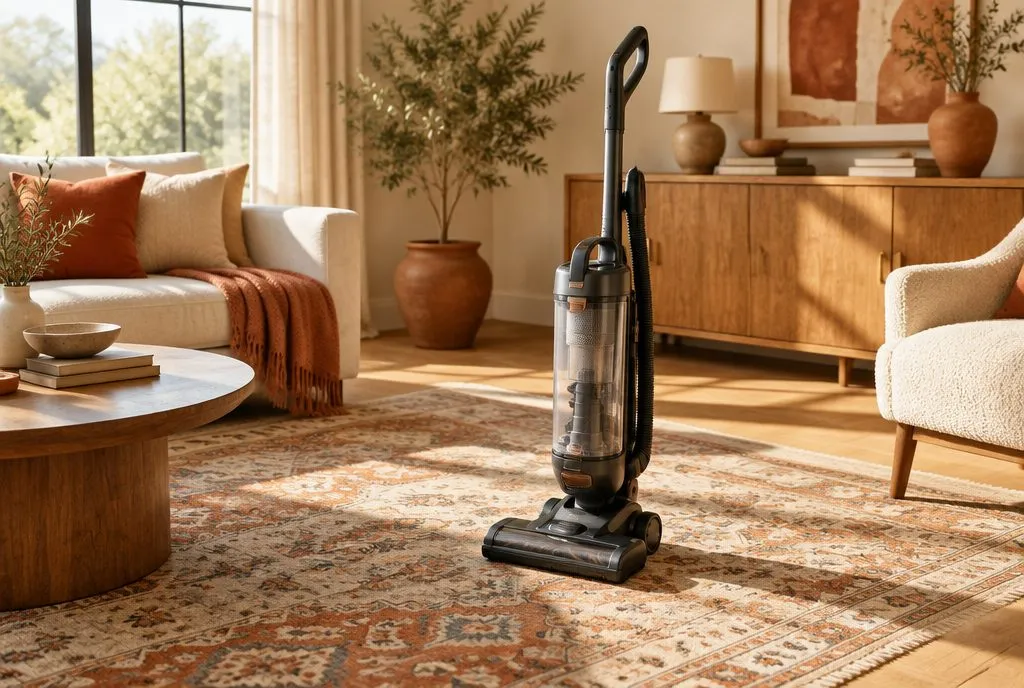
Professional cleaning removes what vacuuming leaves behind, but vacuuming is what protects the rug day to day. Once a week for most rooms, more where there is traffic, with gentle suction and no rotating beater bar on a delicate or hand-knotted rug. A rug that is vacuumed well can wait comfortably at the longer end of its cleaning interval.
Spills do not wait for the schedule
The clock that matters most is the one that starts when something spills. Blot — do not rub — with a clean white cloth and cool water, from the edge inward, and lift the moisture. A spill dealt with in the first minutes often leaves nothing behind; the same spill left overnight becomes a set stain that only a professional, and sometimes not even they, can lift.
Fibre changes the answer a little
Hard-wearing wool and synthetics tolerate the standard interval well. Silk and viscose are less forgiving — they show soil and wear sooner, and should be handled gently and cleaned by a plant that uses low moisture, not sent through the same routine as a wool rug. If you are not sure what yours is, identify it before you build a schedule around it.