
Why water is the enemy
Jute, sisal, seagrass and coir are plant fibres, and plant fibres drink water and change when they do: they turn brown — a watermark known as cellulosic browning — as the fibre dries, the weave shrinks and buckles, and a damp natural rug smells. This is why a natural-fibre rug is never immersion-washed and never steam-cleaned — the method that cleans wool ruins jute.
Routine care is dry care
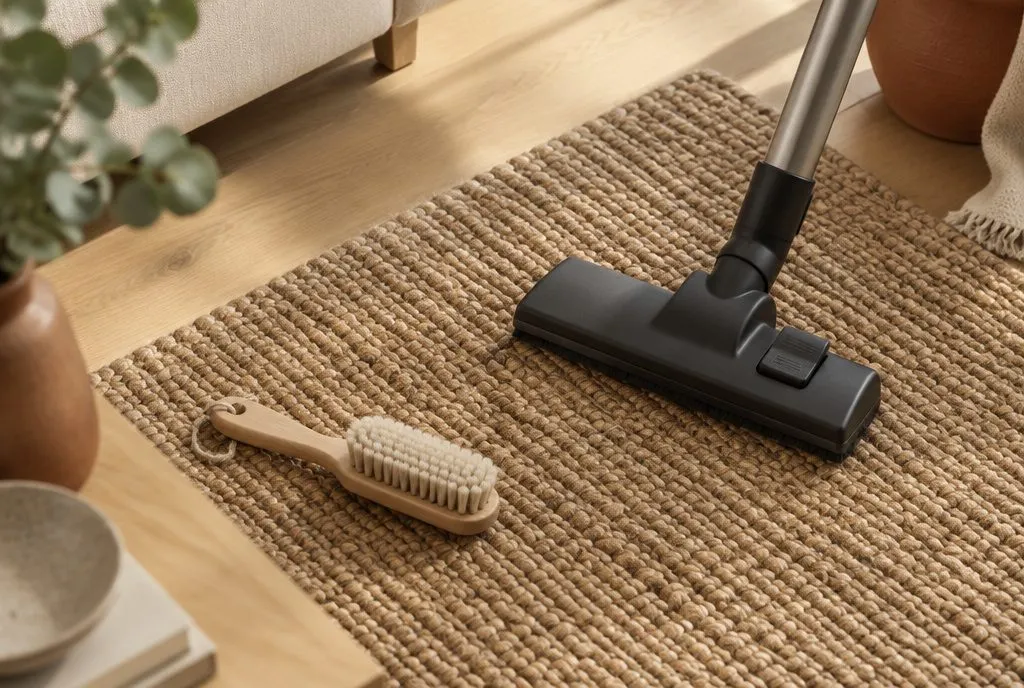
Vacuum regularly on both sides with strong suction to pull the grit down out of the weave, and rotate the rug so it wears evenly. Take a smaller natural-fibre rug outside now and then and shake it hard. Because you cannot wash these rugs freely, this dry work is what keeps them clean, so do it more often than you would for wool.
Deal with spills in seconds
Blot a spill the instant it happens with a dry white cloth, pressing straight down to lift the liquid before it soaks in — do not rub, and do not add water. For a spot that needs more, use the least moisture possible with a barely damp cloth, then dry the area immediately with a fan or hairdryer on cool so no watermark forms. Baking soda, left on dry and vacuumed up, handles odour without any water at all.
What not to do
Keep these rugs away from everything wet: no soaking, no steam cleaner, no carpet shampooer, no wet wash. Do not put a natural-fibre rug in a bathroom or any damp room, and lift it off a floor that has been mopped until the floor is dry. One thorough soaking is often enough to brown or buckle a jute rug for good.
When it needs a professional
A natural-fibre rug that is genuinely dirty, water-damaged or stained is a job for a plant that cleans it with controlled low moisture and dries it fast and flat — not the immersion wash a wool rug gets. If yours has been soaked or has a set stain, have it looked at sooner rather than later, before the browning spreads.