
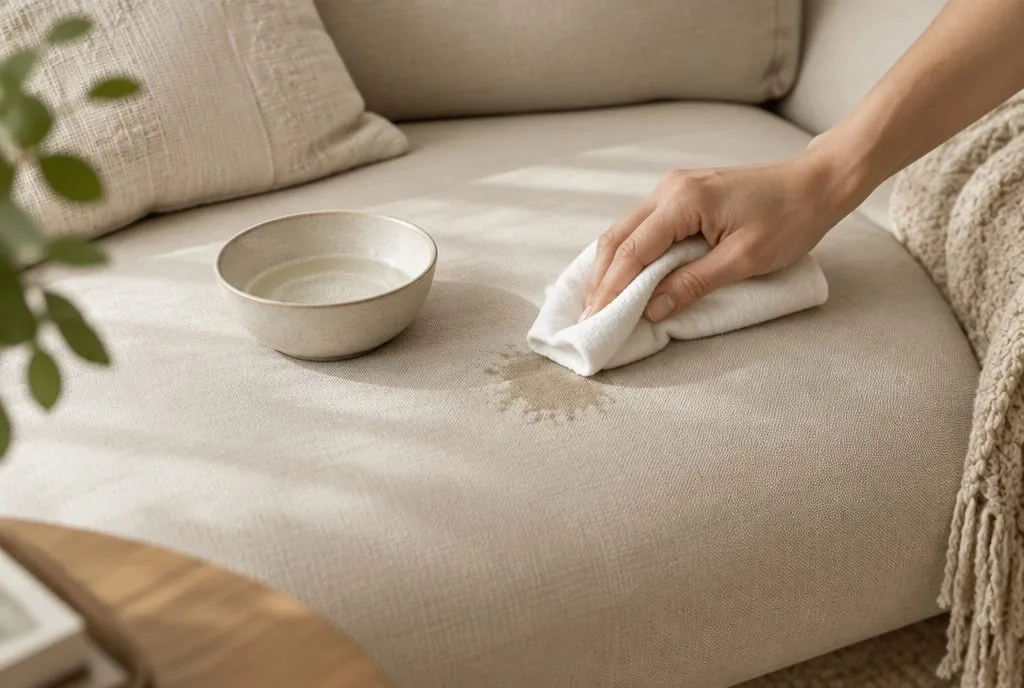
Code first, then blot
Before anything, check the care code on the tag: W allows a water-based cleaner, S means solvent only, WS allows either, and X means vacuum only. Then deal with the stain fresh — blot up all you can with a clean cloth, working from the edge of the stain inward so it does not spread, and never rub, which pushes it into the weave and frays the fabric.
Food, drink and grease
On a W or WS fabric, a little mild dish soap in cool water on a cloth lifts most food and drink; blot it in and blot it back out, keeping the fabric barely damp. Grease responds to a sprinkle of baking soda to absorb the oil first, then the same gentle soap. On an S fabric, use a dry-solvent upholstery cleaner for these instead of water.
Pet accidents and other protein stains
Protein stains — pet urine, blood, vomit — set with heat, so use cold water only, and for pet urine an enzyme cleaner that breaks the protein down rather than masking it. Never use hot water or a steam tool on them. On an S-code fabric, blot up the liquid, then treat with a solvent product and have anything deep handled professionally.
Ink, and when to stop
For ink, dab — do not soak — with a little isopropyl alcohol on a cloth, testing a hidden spot first, as alcohol suits many S-code microfibres but can affect some dyes. If a stain is set, dye-based, spread across a cushion, or on a delicate or S/X fabric you are unsure about, stop before you make a ring and have a professional treat it to the fabric type.