
The rules for every carpet stain
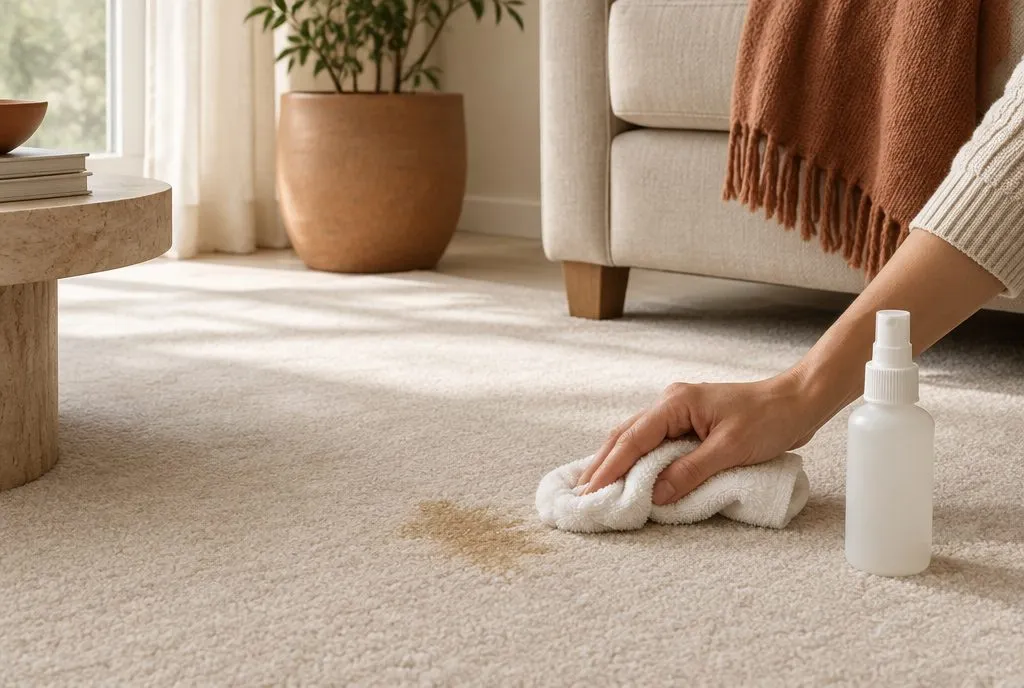
Three habits save most carpet. Blot, do not rub — rubbing drives the stain into the pile and frays it. Work from the outside of the stain inward so it does not spread. And test any cleaner on a hidden patch first, since some strip colour. Deal with it fresh; a spill lifted in minutes often leaves nothing, while the same spill left overnight sets.
Wine, coffee and tea
Blot up all you can, then flush with cool water and blot again. A little mild dish soap in cool water lifts most of what is left; for red wine, cool water and steady blotting beat any folk remedy, and the key is not letting it dry. Skip hot water, which can set the tannin, and do not scrub.
Pet accidents, blood and protein stains
Protein stains set with heat, so always use cold water on them. Blot, rinse with cold water, and for pet urine use an enzyme cleaner that breaks the protein down rather than masking it. Never put hot water or steam on urine or blood — it bonds the stain and the smell in permanently.
Grease, oil and ink
Greasy stains want a little warm water with mild dish soap, blotted through, or a sprinkle of baking soda to absorb the oil first. For ink, dab — do not soak — with a small amount of isopropyl alcohol on a cloth, testing a hidden spot first because alcohol can affect some dyes. Gum and wax come up better chilled: harden with ice, lift off the solid, then treat what remains.
Do not drown it, and know the limits
Pour-on cleaners and a soaked spot cause their own problem: the water reaches the backing and pad, dries slowly, and wicks the old stain back up to the surface days later. Use the least moisture you can and dry the area fast. Old, set or dye-based stains, and bleach marks where the colour is already gone, are often past DIY and need a professional.