
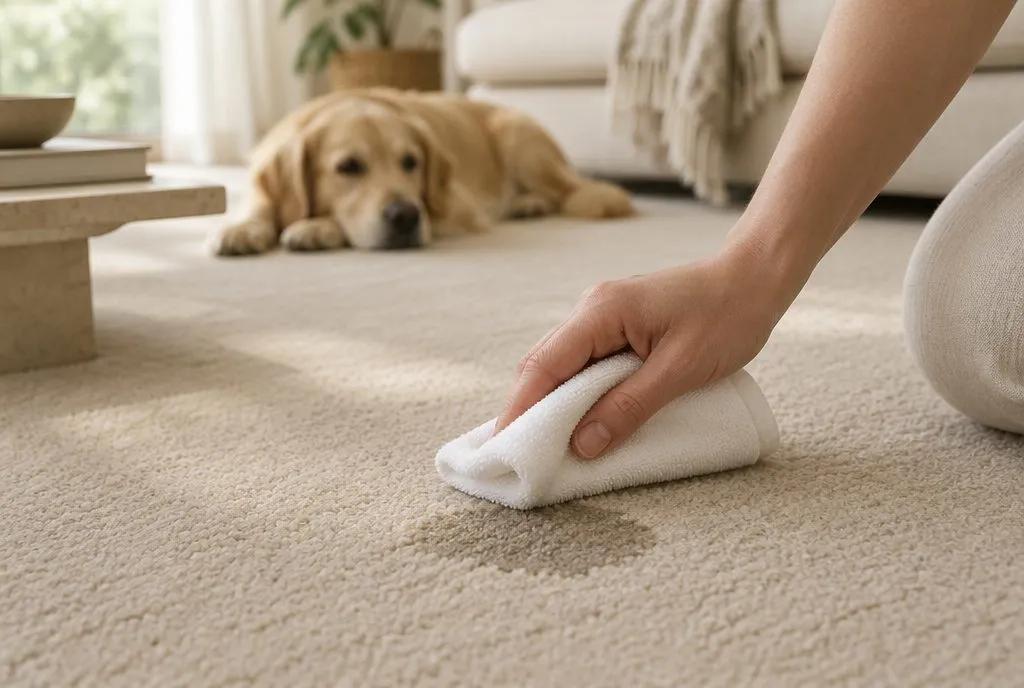
Blot it up fast
Press clean white cloths or paper towels down hard to pull up as much urine as you can, standing on them if you need to, and keep going until they come up nearly dry. Every bit you lift now is urine that does not soak down into the pad. Do not rub, which spreads it and works it deeper into the pile.
Treat it with an enzyme cleaner
Pet urine is a protein, and an enzyme cleaner is the only thing that breaks it down rather than masking it. Soak the spot generously — enough to reach as far as the urine did — let it dwell for the time on the label, then blot and let it air-dry. A vinegar-and-water rinse helps on a fresh accident, but enzymes do the real work on a set-in smell.
Never steam or use heat
Heat permanently bonds urine proteins to the carpet fibre, so a steam cleaner or hot water on a urine spot locks the smell in for good. Keep heat off any area you suspect is urine, and treat it with cool water and enzymes instead. This is the single most common mistake that turns a cleanable accident into a permanent one.
When it has reached the pad
Carpet sits over a pad and subfloor, and urine runs straight through. The signs it has gone deep are a smell that returns after cleaning, a stain larger underneath than on top, and repeat accidents in one spot. At that point no surface treatment reaches it: it needs deep sub-surface extraction, and sometimes the pad lifted and replaced and the subfloor sealed.
Stop it coming back
Pets return to a spot they can still smell, even faintly, so the goal is to remove the odour entirely, not cover it. Enzyme treatment that reaches as deep as the urine did is what breaks the cycle; a scented spray on top does not, and often makes a pet mark the spot again.