
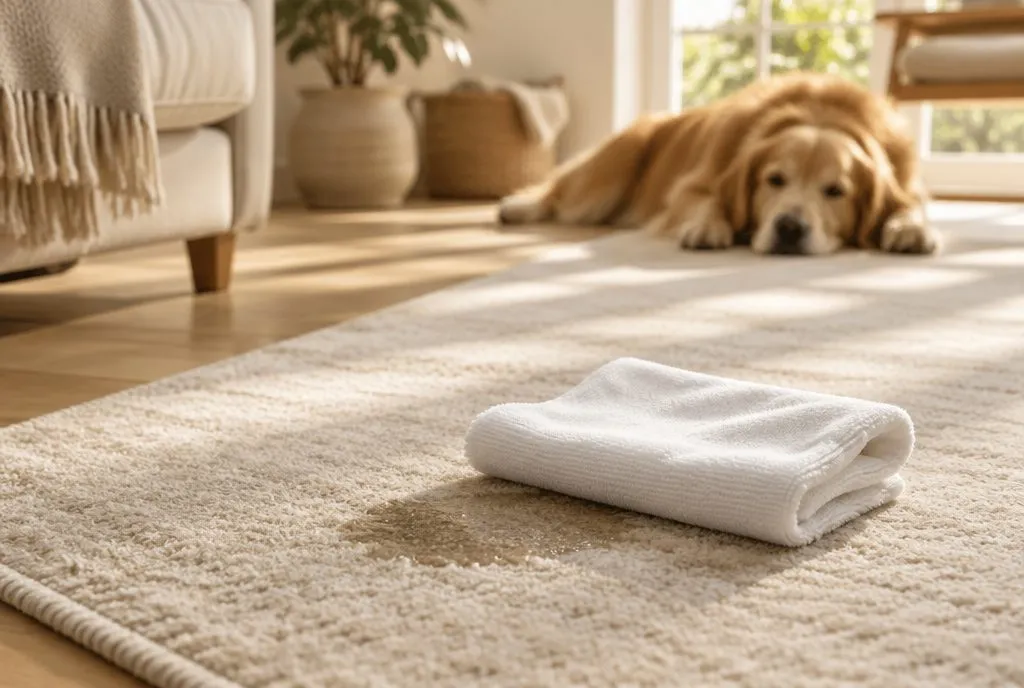
Blot it up the moment you find it
Fresh urine is far easier to deal with than dried. Press clean white cloths or paper towels down hard to pull up as much liquid as you can, standing on them if you need to, and keep swapping until they come up nearly dry. Do not rub — rubbing spreads it and pushes it into the pile. Speed matters more than technique here.
Treat the odour with an enzyme cleaner
Pet urine is a protein, and an enzyme cleaner is the thing that breaks it down — masking it leaves the smell to return in humid weather. Check the rug is washable first — a hard-wearing synthetic or cotton rug, not wool, silk or viscose — then saturate the spot with a pet enzyme cleaner, let it dwell as long as the product says, blot, and let it air-dry. A vinegar-and-water rinse helps on a fresh accident, but on a set-in smell the enzymes do the real work.
Never steam-clean urine
Heat permanently bonds urine proteins to the fibre, which is the one mistake that turns a cleanable accident into a lasting smell. Keep steam cleaners and hot water off any spot you suspect is urine. The same caution rules out a hot machine wash for a rug that has been marked.
Know when it has gone too deep
Surface treatment works when you catch it early. Once urine soaks through to the backing and the foundation — repeat accidents in one spot, a smell that returns after cleaning, a stiff patch underneath — no spray reaches it, and the rug needs a full immersion wash at a plant, where it is flushed right through and dried under control. On a wool, silk or hand-knotted rug, go straight to a professional; the DIY step is only safe on washable synthetics.
What professional treatment costs in NYC
A plant that handles pet contamination charges for the wash plus the odour treatment. Area-rug cleaning runs about $3 to $12 per square foot with a $150 minimum, and pet treatment is usually quoted on top once the rug is inspected. It is worth comparing a couple of cleaners, since pet jobs vary more than ordinary cleaning.