
Outdoor rugs are built to get wet
Most outdoor rugs are woven from polypropylene (sometimes called olefin), a synthetic fibre made to resist sun, rain and mildew. That changes everything compared with an indoor wool or silk rug: water does not harm it, the dyes do not bleed, and you can clean it the easy way — with a hose, some soap and a brush. This guide is for those synthetic rugs; a natural-fibre outdoor rug is different, below.
Shake, sweep and hose it down
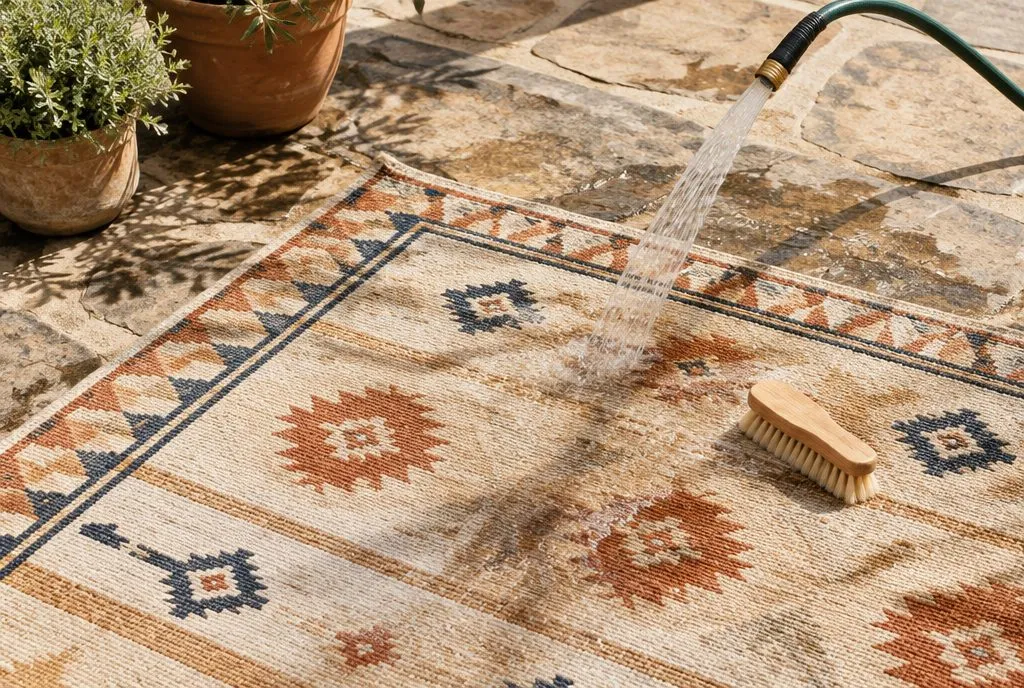
Start dry: shake the rug or sweep and vacuum both sides to clear loose dirt and grit, which otherwise turns to mud. Then lay it on a clean hard surface — a patio or driveway — and hose it all over to wet it through. Because the fibre holds no water, most everyday grime rinses straight off at this stage.
Scrub gently, then rinse well
For anything the hose leaves behind, mix a little mild dish soap in a bucket of lukewarm water and work it in with a soft-bristled brush, using light pressure — scrubbing hard can fray even a tough synthetic. Then rinse, and rinse again, until the water runs clear: leftover soap residue is sticky and makes the rug dirty faster. For a greasy mark, a mild degreaser works where soap does not.
The one rule: lukewarm, never hot
Polypropylene has a low melting point, so hot water and a hot day in direct sun can distort or glaze the fibres over time. Use lukewarm water, not hot. A pressure washer can be used on a sturdy outdoor rug, but keep the nozzle well back and the pressure moderate, since a close, high-pressure jet can tear the weave.
Dry it fully, and the exception
Hang the rug over a railing or lay it flat where air reaches both sides, ideally in the shade, and let it dry completely before it goes back down — a damp rug under foot traffic grows mildew and smells, even outdoors. One exception to all of this: a natural-fibre outdoor rug, such as jute or sisal, is not water-safe and browns or rots if you hose it. If yours is a natural fibre, treat it dry.