
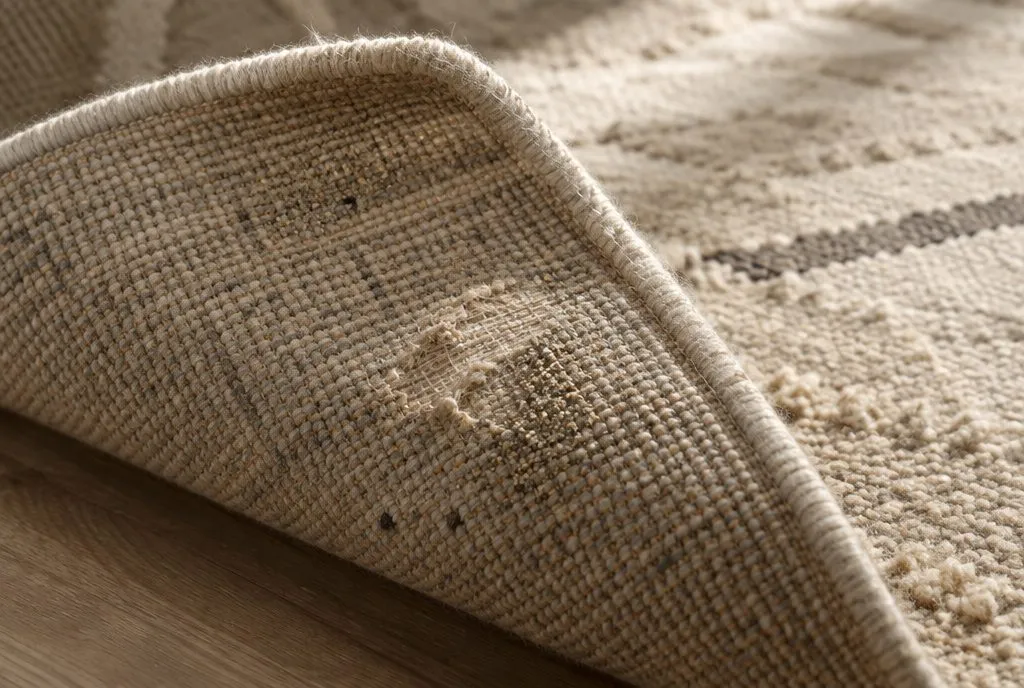
What eats wool rugs
The culprits are clothes-moth larvae and carpet beetles, and they eat protein fibres — wool, silk, and other animal fibres. A synthetic rug is safe; a wool or silk one is food. It is the larvae that do the damage, not the adult moths you see flying, which is why an infestation can be well underway before you notice anything.
The signs of an infestation
Look for bare, threadbare patches where the pile has been grazed away, often in a corner or under a sofa; fine, sandy grit (the larvae’s droppings) worked into the base; silky webbing or tiny tube-like casings; and the larvae themselves, small and cream-coloured. Check the back and the parts of the rug that never move — damage almost always starts where it is dark and undisturbed.
How to prevent them
The single best defence is to use the rug. Moths and beetles want stillness and dark, so a rug that is walked on, vacuumed, rotated and aired is a poor target. Vacuum regularly including under the furniture and along the edges, lift the rug now and then to clean beneath it, air it in sunlight occasionally, and store any rug you put away clean. Soil and food residue are what draw pests in the first place.
If your rug is already infested
Act quickly, because larvae keep eating. Vacuum the rug and the floor beneath it thoroughly and bin the bag, and for a smaller rug, sealing it in a bag and freezing it for several days kills the larvae and eggs. Then have the rug professionally cleaned, which flushes out eggs and debris a vacuum cannot, and treat the area around it. A badly infested rug may need specialist moth treatment.
Do repellents work?
Cedar and lavender help deter moths, but they repel rather than kill and lose strength as the scent fades, so treat them as a supplement to real prevention, not a cure. Keep cedar fresh or re-oiled, and never rely on a sachet alone to protect a valuable rug — use, vacuuming and airflow do far more.