
Clean and dry it first
Never store a rug dirty. Soil, crumbs and especially food or pet residue are exactly what clothes moths and carpet beetles come for, and a wool rug put away with any of that in it can be eaten through by spring. Vacuum it thoroughly, deal with any spots, and make sure it is completely dry — a trace of damp sealed away becomes mildew.
Roll it, never fold it
Fold a rug and the crease crushes the pile and, on a hand-knotted rug, can crack the foundation along the fold — a permanent line. Always roll it instead, evenly and not too tight, in the direction of the pile so it lies flat again later. Roll a fringed rug with the fringe tucked in so it does not get crushed or caught.
Wrap it breathable, never plastic
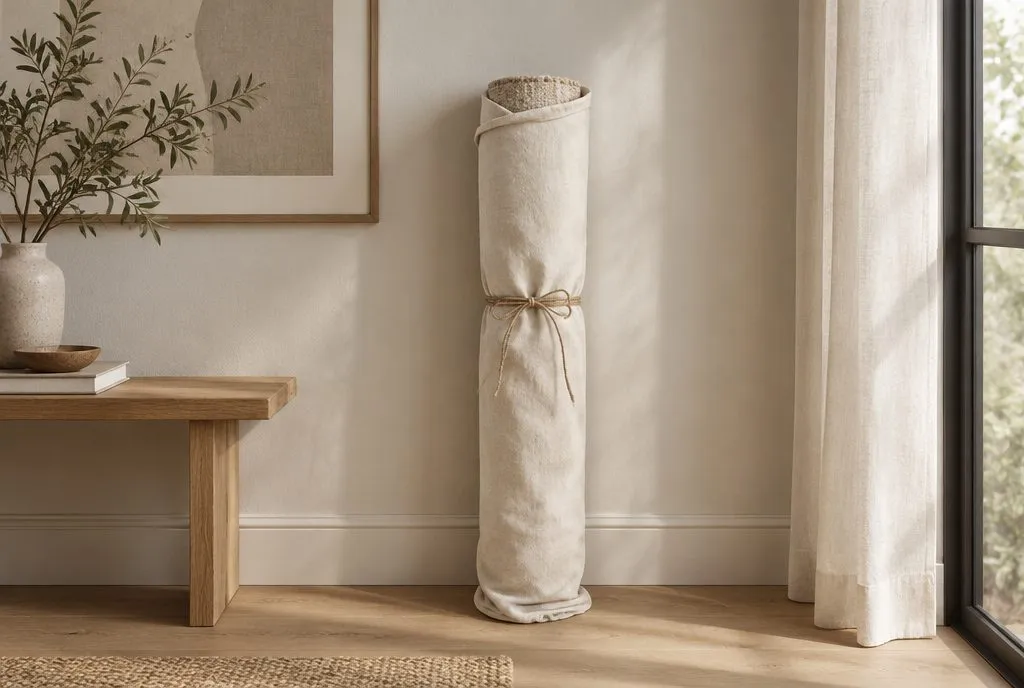
The wrap has one job: keep dust and pests off while letting the rug breathe. Use a cotton sheet, a breathable fabric or house-wrap material, taped closed. Do not seal a rug in plastic — plastic traps whatever moisture is in the fibre and the air, and a rug sweating inside sealed plastic grows mould and mildew. Breathable keeps it dry; airtight does the opposite.
Moth-proof it
For a wool, silk or other natural-fibre rug, add moth protection before you wrap it. Cedar blocks or lavender sachets near the roll help deter moths, though they repel rather than kill. Keep the rug away from damp and check on it every couple of months, unrolling it to look for any sign of pests — catching an infestation early is the difference between a fright and a ruined rug.
Where to keep it
Store the rolled rug flat and off the floor — on a shelf or raised on blocks — in a cool, dry, dark place with stable temperature. Avoid basements and attics that flood, leak or swing between damp and dry, and never stack heavy boxes on top, which crushes the roll. A closet or a climate-controlled storage unit is ideal.