
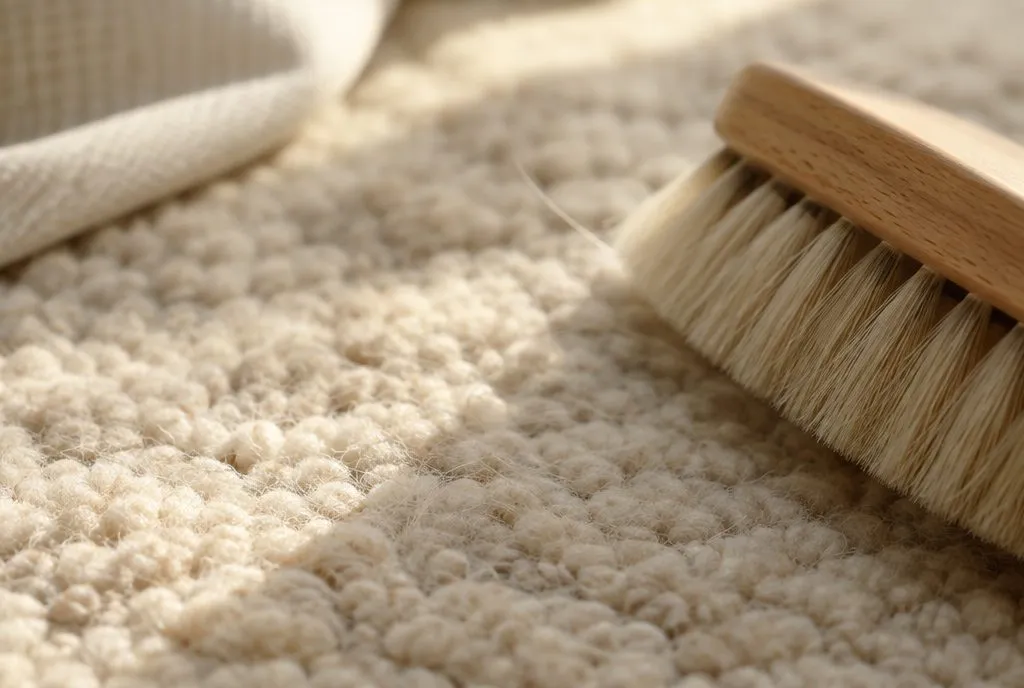
Why rugs shed
Most shedding is loose fibre left over from how the rug was made, working its way to the surface. It is most noticeable on a new hand-tufted wool rug, where short cut ends sit in the pile and release with use. This is normal and expected — it is not a sign of a defect or a rug falling apart.
Is it normal, and how long does it last?
For a new wool rug, yes — expect visible shedding for a few weeks to a few months, heavier at first and easing as the loose fibre clears. A busy rug sheds out faster than one in a quiet room. If a rug is still shedding heavily after many months, or an older rug suddenly starts, that points to a low-quality rug or wear rather than normal break-in.
How to reduce it
Vacuum gently and regularly with suction and the beater bar off, which lifts the loose fibre out without tearing more free. Do not yank a tuft that stands proud of the surface — pulling can unravel the pile; snip it level with scissors instead. Resist vacuuming on the most aggressive setting in the first weeks, which pulls out more than it needs to.
Which rugs shed, and which do not
Construction decides it. Hand-tufted wool rugs shed the most, especially when new. Hand-knotted rugs and flatweaves shed very little, because their fibres are locked into the foundation. Viscose, the one to watch, keeps shedding and sheds more easily than wool, which is one more reason it is a delicate, high-maintenance fibre.
When shedding is a problem
Shedding is only a warning sign when it does not follow the normal pattern: heavy shedding that never eases on a rug you have had for a long time, bald patches forming, or fibre coming out in clumps rather than fine fluff. That is wear or a quality problem, not break-in, and it is worth having the rug looked at rather than cleaned harder.