
Why pet hair clings
Fine pet hair carries a static charge that bonds it to carpet and rug fibres, so it threads down into the pile rather than resting on top. A normal vacuum pass glides over a lot of it. The whole trick is to break that static and rake the hair up to the surface, then collect it — which is why a rubber tool often beats the vacuum.
The rubber glove and the squeegee
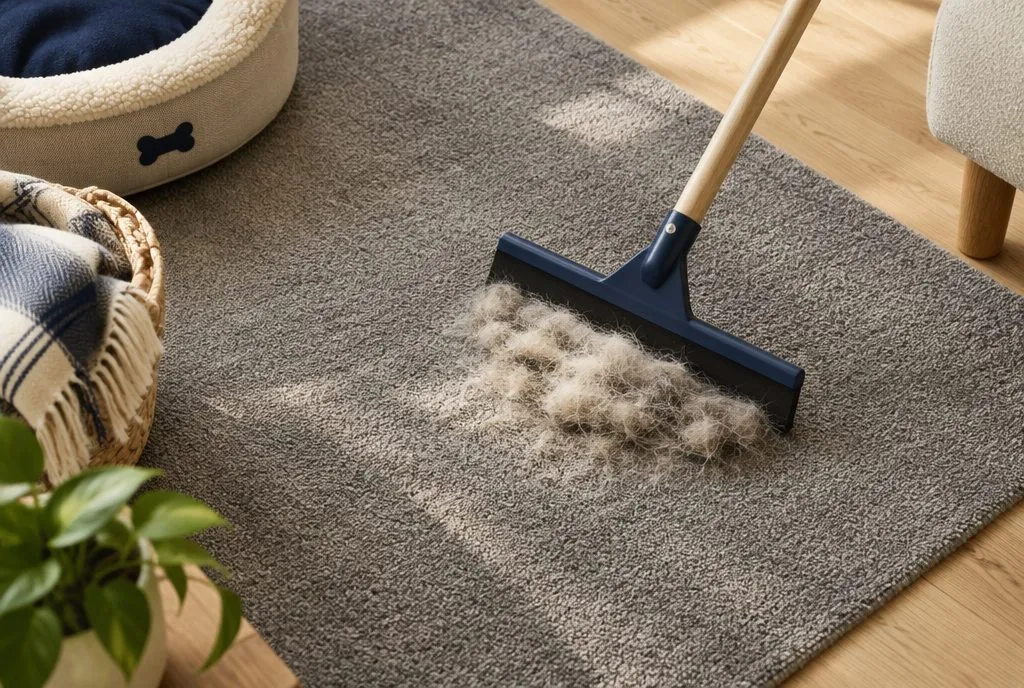
The two best tools cost almost nothing. Put on a rubber washing-up glove, dampen it slightly, and run your hand firmly across the carpet in one direction — the static and grip gather the hair into clumps you can pick up. A rubber-edged window squeegee does the same on a larger area, dragging embedded hair up out of the carpet into a heap you can lift. Work in one direction so the hair collects in one place.
Break the static first
Loosening the hair before you vacuum makes everything easier. Sprinkle baking soda over the carpet, leave it ten to fifteen minutes and then vacuum — it neutralises the static and lifts a little odour as a bonus. A light mist of fabric softener diluted well with water does the same; let it dry, then vacuum. Use either sparingly: you cannot rinse carpet, so a heavy hand leaves residue that attracts dirt.
Vacuum the right way
Then vacuum, slowly and in several directions, so the suction pulls the loosened hair out of the pile rather than skating over it. A vacuum with a pet or rubber-bristle attachment and good suction lifts far more than a basic head, and a HEPA filter keeps the dander it stirs up from blowing back out. For stairs, work top to bottom so you are not dropping hair onto steps you have done.
On rugs and couches too
The same tools work beyond the carpet. On an area rug, the rubber glove and squeegee lift hair a vacuum leaves, and a smaller rug can be taken outside and shaken. On a fabric couch, use the upholstery attachment and a slightly damp rubber glove on the cushions and seams. Staying ahead of it — grooming pets, vacuuming high-traffic spots often — beats any single deep clean.