
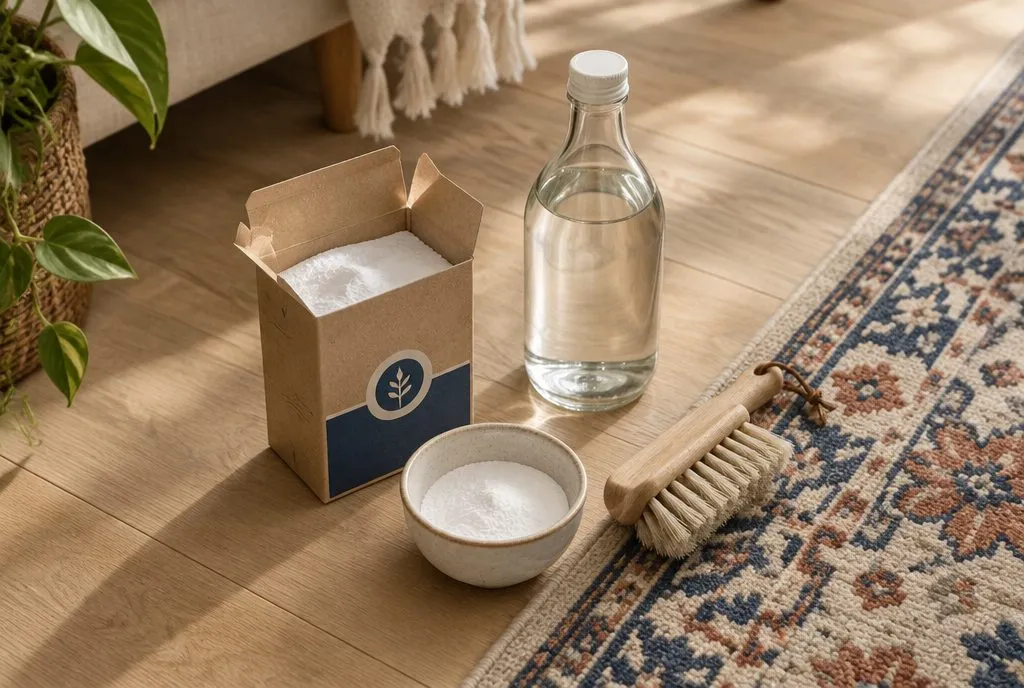
Baking soda for odour
The simplest and safest of the lot. Sprinkle a dry layer over the rug or the smelly patch, leave it an hour for everyday smells or overnight for a stubborn one, then vacuum it up. It absorbs odour rather than masking it, and because it is dry it is safe on almost any rug. Strong pet smells are the exception — those need an enzyme cleaner, not baking soda.
Mild dish soap for spots
For a fresh spill on a washable rug, a few drops of mild dish soap in cool water, applied to a cloth and blotted from the edge of the stain inward, lifts most food and drink. Blot, do not rub, and rinse the spot with a clean damp cloth so no soap is left behind. Skip this on anything you are not sure is washable.
Diluted white vinegar for general grime — with limits
One part white vinegar to two parts cool water, misted lightly and worked with a soft brush, freshens a dull but hard-wearing synthetic rug and helps with light odour. The limit matters: vinegar is mildly acidic and must stay off wool, silk and viscose, where it can dull the fibre and move dye. Mist, never soak, and let the rug dry fully.
What to keep away from a rug
Some common remedies do more harm than good. Keep bleach and strong alkaline or “oxy” cleaners off wool and silk, keep hot water and steam off any spot that might be urine, and keep hydrogen peroxide off coloured rugs unless you have tested it. Anything that foams aggressively or promises to “lift any stain” earns a hidden-corner test first.
The rugs to not experiment on
Homemade solutions are for hard-wearing, washable rugs. A wool, silk, viscose, antique or hand-knotted rug is the wrong place to try a recipe — the damage from a bleed or a watermark usually costs more than a professional clean would have. For those, dust and vacuum gently between washes and leave the wet work to a plant.