
Find the source first
Before you deodorise, work out what you are smelling. Everyday staleness is one thing; a sharp smell in one spot is usually a pet accident, a sweet-sour smell is often a spilled drink, and a damp, earthy smell is moisture. Masking the smell with a scented spray only buys a few hours, because the source is still there. Treat the cause and the smell goes for good.
Baking soda, the everyday workhorse
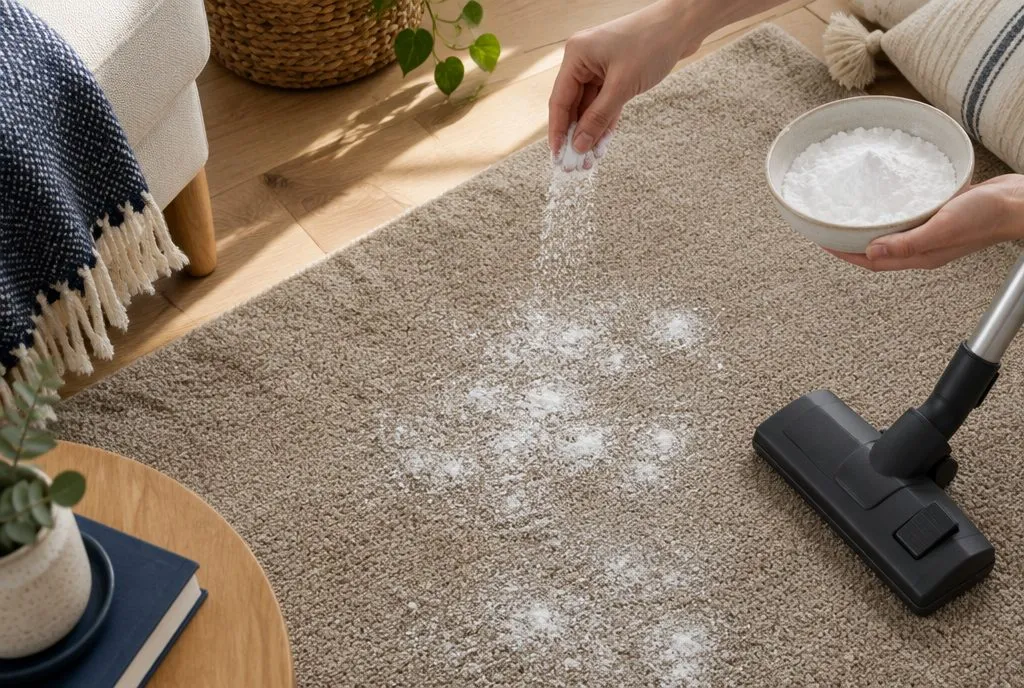
For general staleness, baking soda is the simplest fix. Sprinkle it generously over the carpet, work it lightly into the pile, and leave it at least an hour — overnight for a stronger smell — then vacuum it all up. It absorbs odour rather than masking it, and because it is dry it is safe on almost any carpet. This alone clears most everyday smells.
Pet smells need enzymes, not baking soda
Pet urine is a protein, and baking soda or a scented spray only covers it — the smell returns in humid weather. Treat a pet spot with an enzyme cleaner that breaks the protein down, never with heat or a steam cleaner, which sets it permanently. If the smell keeps coming back after cleaning, the urine has reached the pad and needs deeper extraction.
A musty smell means moisture
A musty, mildew smell is not a surface problem — it is moisture trapped in the carpet backing or the pad, growing mildew. No amount of baking soda fixes a wet pad; you have to dry it out and find where the water is coming from, whether a past spill that was never dried, a leak, or damp rising in a basement. Dry it fully, fix the source, and the smell clears.
Smoke, stubborn smells and when to call a pro
Some odours are soaked deep. Cigarette smoke, heavy pet contamination, and smells that survive a good baking-soda-and-enzyme treatment are usually past a home fix, because the odour is through the whole carpet and into the pad. A professional hot-water extraction flushes out what sits below the surface — for pet contamination the cleaner pre-treats with enzymes first and never puts heat on untreated urine — and a badly affected pad sometimes has to be replaced. Ventilating the room while you work always helps.