
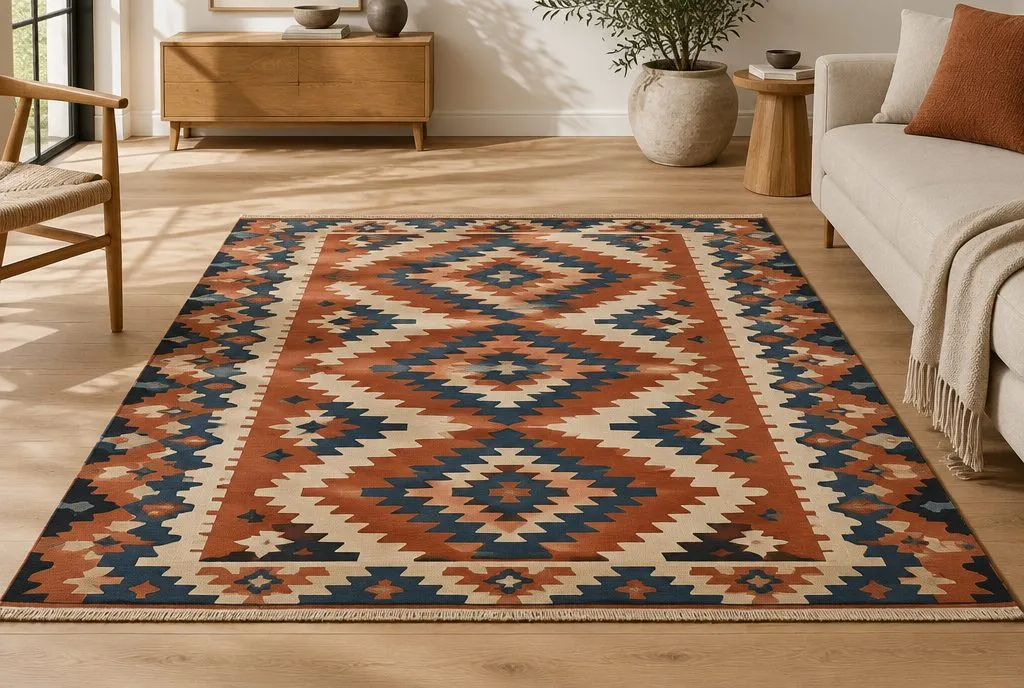
What a flatweave is
A flatweave is woven flat with no pile — kilims, dhurries and soumaks are the common types — so the pattern runs right through and most are reversible. They are usually wool or cotton, and the older and more traditional ones are coloured with natural, vegetable dyes. No pile means dirt sits on the surface rather than sinking in, which makes them easy to clean dry, but the dyes are the thing to respect.
Vacuum and shake both sides
Because a flatweave is thin and reversible, clean both sides. Vacuum with suction only and the beater bar off — a rotating bar can catch and pull the weave and the fringe — and flip it to do the back, where grit collects. A smaller kilim is light enough to take outside and shake or gently beat, which moves more loose soil than a vacuum alone.
Spot-clean, but test the dyes first
Before any water touches a flatweave, test for colour bleed: dab a damp white cloth on a hidden corner and press for a few seconds, and if colour transfers, stop and leave it to a professional. If it stays clean, blot a spill with cool water and a little mild detergent on a cloth, working from the edge inward, and keep it barely damp. Natural dyes run easily, so less water is always safer.
Washing a flatweave
Some small cotton dhurries are washable — check the label, and if so use cold water and a gentle cycle, never hot. A wool kilim, anything with natural dyes, or an antique should not be wet-washed at home: the risk of the colours bleeding into each other is too high. Those are a job for a plant that tests the dyes and cleans with controlled, low moisture.
Drying and everyday care
If a flatweave does get wet, dry it flat with airflow and do not hang a wet wool kilim, which can distort the weave. Day to day, rotate it so it wears and fades evenly, keep it out of constant direct sun, and use a thin rug pad underneath — flatweaves slide easily and a pad also cushions the weave against the floor.