
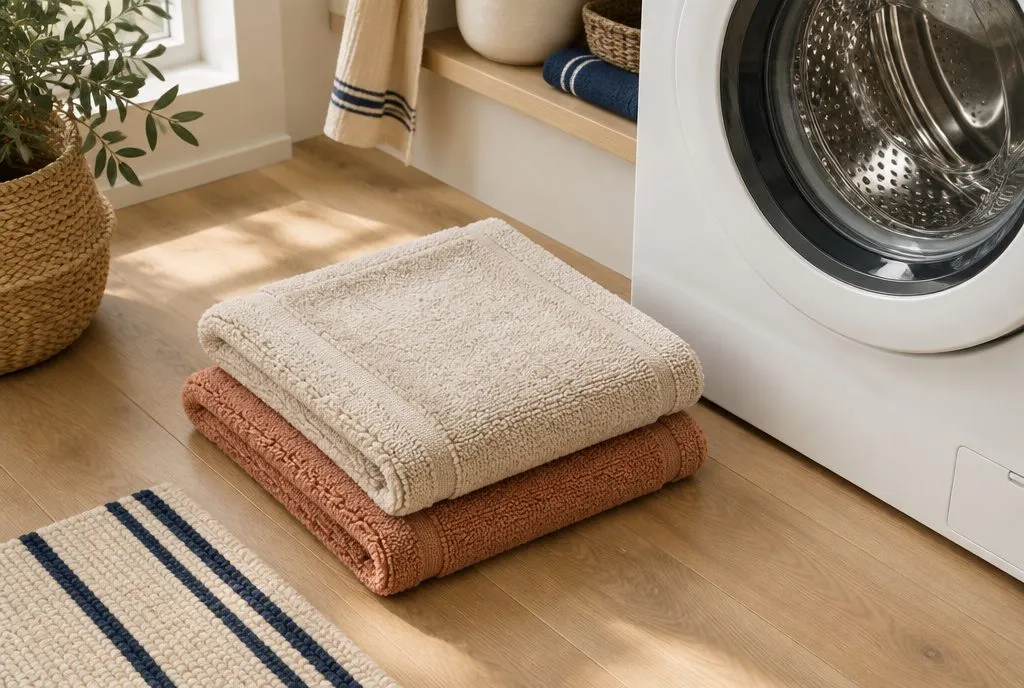
Most bath mats are washable — check first
Unlike an area rug, most cloth and microfibre bath mats are made to go in the washing machine, which makes them easy to keep clean and fresh. Check the care label before you start, though: a rubber-backed mat, a memory-foam mat or a bamboo or teak mat each needs different handling, below. For a standard cotton or microfibre mat, the machine is the simplest route.
Machine-washing, the right settings
Shake the mat out first to lose loose hair and grit, then wash it in warm or cool water on a gentle cycle with a normal detergent. Skip the fabric softener — it coats the fibres and cuts the absorbency that makes a bath mat useful — and wash it with towels rather than delicate clothes. Warm water and a mild detergent handle the damp, soap-scum grime a bathroom mat collects.
Mind the rubber backing
The non-slip rubber or latex backing on many bath mats is the part that fails first, and heat is what kills it. Dry the mat on low heat or, better, hang it to air-dry; a hot dryer makes the backing go brittle, crack and peel, and then flake off in the wash. If the backing is already peeling, air-drying from now on stops it getting worse.
Memory-foam, rubber and wooden mats
Not every bath mat goes in the machine. A memory-foam mat usually has a washable cover you can remove, or needs a gentle cold wash and air-drying flat — never wrung out, which tears the foam. A solid rubber or plastic non-slip mat is wiped down, and a white-vinegar-and-water spray clears the pink or black mildew that collects in its suction cups. A wooden bath mat is wiped, dried and oiled, not washed.
How often, and why it matters
Wash a bath mat about once a week, more in a busy or poorly ventilated bathroom. It sits damp between uses, and damp plus warmth is exactly what mould and mildew need, so a bath mat gets grimy and starts to smell far faster than a rug in a dry room. Hanging it up to dry between uses, rather than leaving it flat on the floor, buys it a lot more time.