
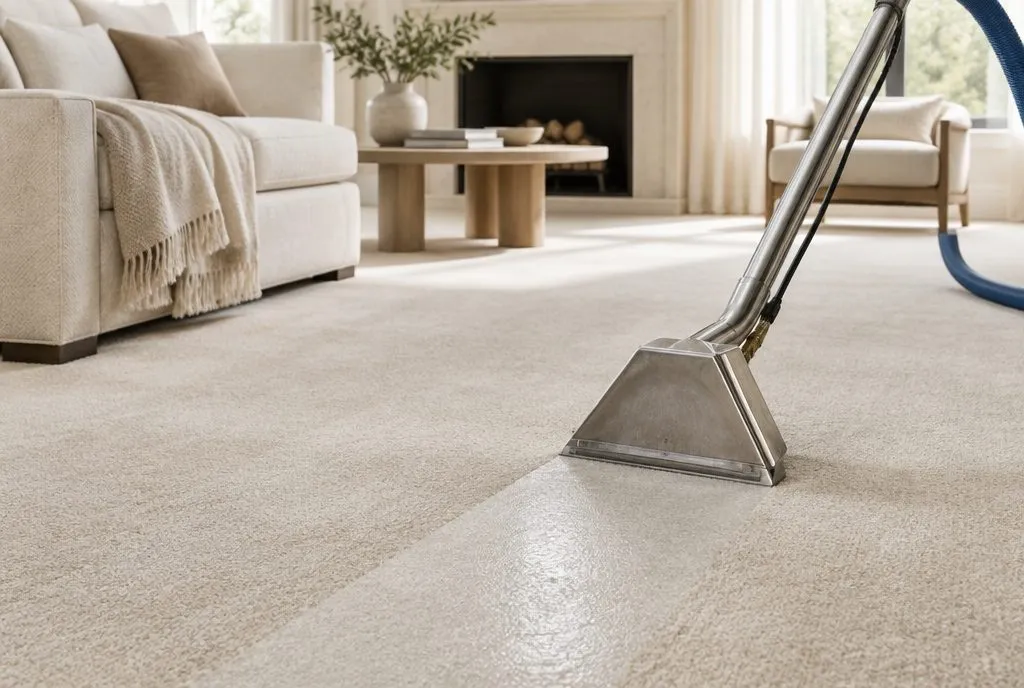
What "steam cleaning" really is
Steam cleaning is the common name for hot-water extraction, and it is the industry standard. Hot water and a cleaning solution are sprayed into the carpet under pressure and immediately vacuumed back out, flushing the soil with it. It is not actually steam — it is hot water — and because it puts water deep into the carpet, the trade-off is drying time, usually 6 to 12 hours with good airflow.
What shampooing and encapsulation do
The older shampoo method works a foaming detergent into the carpet with a brush; encapsulation, the modern low-moisture version, uses a solution that crystallises around the soil so it can be vacuumed out once dry. Both clean mainly at the surface, use far less water than extraction, and dry in an hour or two — which is why they suit commercial carpet and quick turnarounds.
Which to choose
Match the method to the job. For deep or ground-in soil, pet contamination, allergies, or an annual reset, hot-water extraction gets carpet the cleanest because it rinses the soil out rather than lifting it off the top. For a light refresh, a space that cannot be out of use for long, or commercial carpet between deep cleans, low-moisture encapsulation is faster and drier.
The thing that matters more than the name
Whatever it is called, the result turns on not over-wetting and drying fast. A careful extraction that is dried quickly beats a sloppy one every time, and a cheap shampoo that leaves sticky residue attracts soil back within weeks. Ask any cleaner how they rinse and how long the carpet will take to dry — the answers tell you more than the method name.