
Leather is not fabric
Forget the W/S/WS/X codes — those are for textile upholstery, not leather. Leather is skin: it must not be soaked, it does not like heat or direct sun, and the all-purpose sprays, vinegar, bleach and solvents that clean other surfaces strip its finish and dry it out until it cracks. Clean it gently, and keep anything harsh away from it.
Dust and wipe it regularly
Most leather care is light and frequent. Vacuum the seams and crevices with a soft brush attachment to lift dust and crumbs, then wipe the surface with a clean, barely damp microfibre cloth to pick up body oils and grime before they build up. Dry it straight after with a second cloth. Done often, this is most of the job.
Clean with a leather cleaner, tested first
For a proper clean, use a cleaner made for leather, or at most a tiny amount of mild soap on a damp cloth, and always test it on a hidden spot first. Work in small sections with the cloth, not by pouring anything on, and never scrub. Blot spills straight away; leave a spill to soak and it can mark the leather permanently.
Condition it — the step people skip
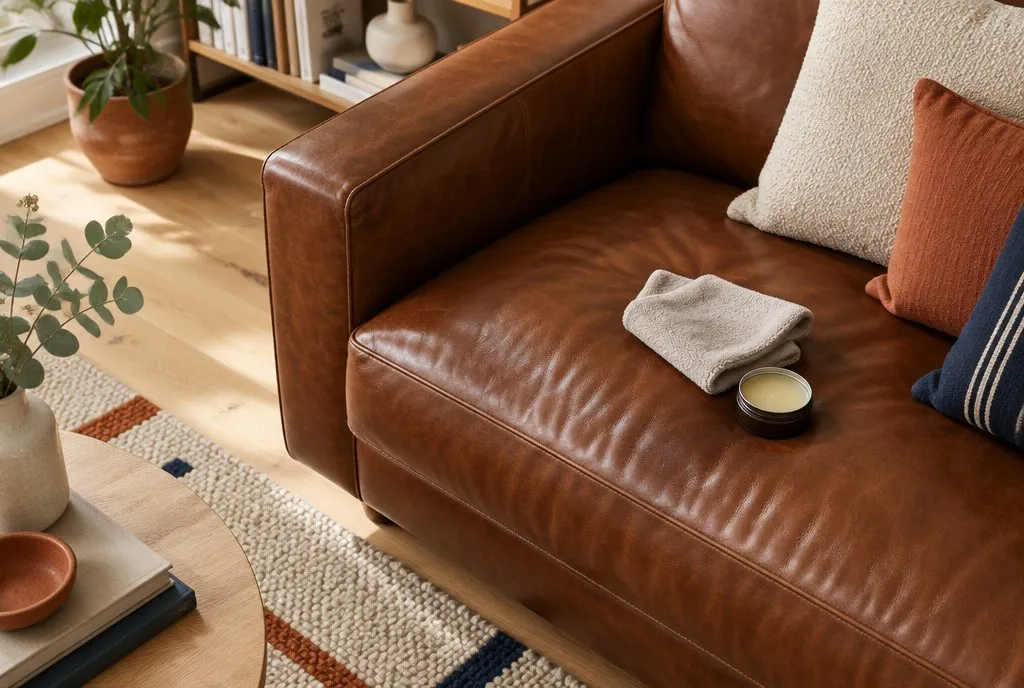
Cleaning removes the natural oils along with the dirt, so leather needs them put back. After cleaning, work a leather conditioner in with a soft cloth and buff it off; it keeps the leather supple and stops the fine cracking that ruins an old sofa. Condition every six to twelve months, more in a dry or heated room, and your leather lasts far longer.
What to avoid, and when to call a pro
Keep baby wipes, all-purpose cleaners, vinegar, ammonia and lots of alcohol off leather — they strip the finish. Keep the sofa out of direct sun and away from radiators, which fade and dry it. Unfinished or aniline leather is more delicate and marks easily, so for a valuable, antique or badly damaged piece, use a leather specialist rather than experimenting.