
PureGreen Carpet and Rug Cleaning
- Area rug cleaning
- Oriental and Persian rug cleaning
- Rug repair
- Carpet cleaning
Manhattan · SoHo
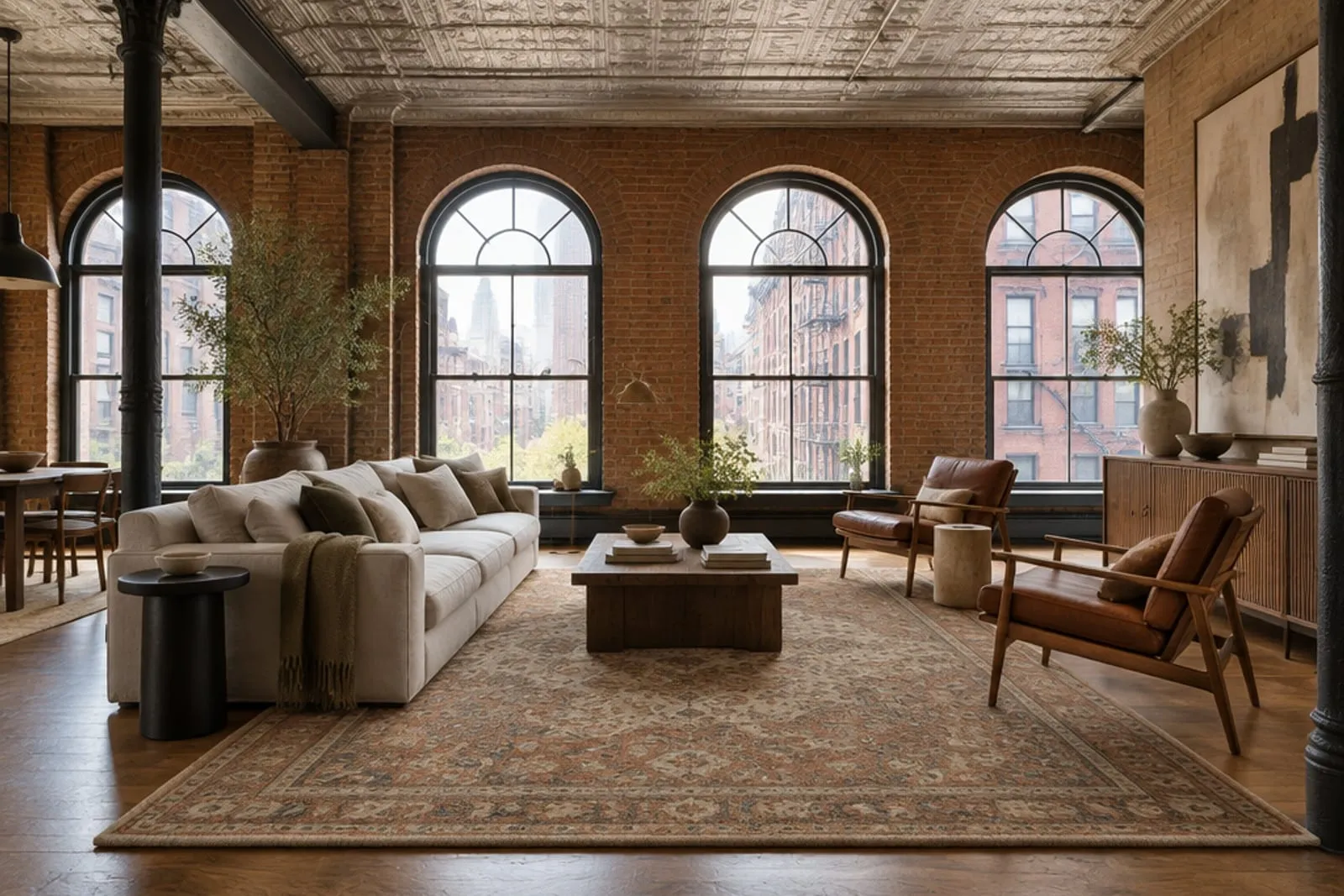
Rug cleaners serving SoHo — South of Houston, between Houston and Canal Streets, in ZIP codes 10012 and 10013. Rug cleaning in SoHo is shaped by two things nowhere else in Manhattan combines: some of the heaviest foot traffic in the city grinding street grit into residential lofts, and buildings that frequently have no doorman to let anyone in. Cleaning a store, restaurant, or showroom rather than a home? Get a commercial quote. Comparing shops? See them side by side.
These companies list Manhattan in their service area. Confirm they cover your SoHo address when you call.
Ratings are each platform’s own figures, linked to the listing. Details come from each company’s website; RugRate has not yet verified these companies.
SoHo residents track in more street dirt than anyone else in Manhattan, and the reasons are structural rather than behavioural.
Greene, Mercer, Wooster, and Crosby retain their nineteenth-century Belgian block paving, and the joints between the stones hold and release fine grit continuously. It travels indoors on shoes in quantities that a smooth asphalt street simply does not produce.
SoHo is one of the most heavily shopped districts in the world, and residential lofts sit directly above and beside that. Entrances are shared, sidewalks are crowded, and the volume of material moving through the neighborhood is on a different scale from a residential block uptown.
Cast-iron and masonry buildings from the 1840s to 1880s, many under near-continuous retail fit-out and renovation, produce construction dust that settles into everything.
The damage a rug suffers is not mainly from what you can see on the surface. It is dry grit working down into the foundation, where it acts like sand between the fibres every time someone walks across it. That cutting action is permanent and unrepairable, and it is the single largest cause of premature rug death in New York.
Where the general guidance is every three to five years, SoHo lofts realistically want a professional wash every one to two years, and annually for anything near an entrance. Vacuum properly in between — slowly, in both directions, which is what actually lifts grit out of the pile rather than skating over it. A doormat inside the entrance, cleaned regularly, is the cheapest rug protection you will ever buy.
This is the practical problem SoHo owners hit, and it is genuinely different from the rest of Manhattan.
Many SoHo loft buildings have no doorman and no full-time super. SoHo's residential stock came out of the artist loft movement — the city amended zoning in 1971 to permit Joint Live-Work Quarters for Artists, and the 1982 Loft Law legalised what already existed. Those buildings became co-ops, and a great many are small and self-managed by the residents themselves rather than by a management company.
What that means in practice
There is no front desk to hold a rug, no super to let a crew in, and no package room. Pickup and delivery are appointments you personally keep, not windows you leave open.
A self-managed co-op may have no formal vendor process at all, or may have an unusually particular one set by whichever resident handles building matters. Ask your board contact rather than assuming — there may be no managing agent to call.
Where a building has ground-floor commercial tenants, the freight elevator and loading area are shared with store deliveries, which are heaviest in the morning. Coordinate rather than assume.
SoHo's side streets are narrow, Belgian-blocked, and heavily restricted for standing. Weekend crowds make vehicle access close to impossible from late morning onward, and Canal Street traffic congests the southern edge throughout the week. Book a weekday morning pickup. Companies that work SoHo regularly will steer you there anyway; it is why a SoHo pickup window may look inconvenient compared with an uptown one.
The SoHo–Cast Iron Historic District was designated in 1973, expanded in 2010, and made a National Historic Landmark in 1978, covering 26 blocks and roughly 500 buildings. It governs exterior alterations. Removing a rug and bringing it back is not something the Landmarks Preservation Commission regulates.
SoHo is a retail district first, and store, restaurant, and showroom operators have requirements a residential page usually ignores.
Entrance matting is the highest-return maintenance in any SoHo retail space. Most of the soil that reaches the back of a store arrives on shoes in the first several feet. Properly specified, regularly cleaned entrance matting removes the majority of it before it travels, and it costs a fraction of replacing worn carpet or rugs.
Scheduling is the real constraint. Retail cannot close for cleaning, so the work happens overnight or before opening — which means a company with staff willing to work those hours and building access arranged for them. Confirm this before booking; not every residential-focused shop can do it.
Showrooms and galleries often hold genuinely valuable rugs as display pieces or stock, on floors that see hundreds of visitors a day. These need frequent low-disruption maintenance cleaning rather than infrequent deep washing, and a company that understands the difference.
Restaurants and hospitality bring grease, food staining, and health-inspection considerations, and typically need documented cleaning schedules rather than ad-hoc jobs.
Start a commercial enquiry at commercial rug and carpet cleaning, or see commercial cleaning in Manhattan.
The most-needed service here. Deeply embedded grit requires proper dusting before washing — the step cheap operators skip, and the one that determines whether the wash accomplishes anything.
The most common quality rug in SoHo lofts, and the one most damaged by embedded grit.
A genuine SoHo specialism. Many lofts are still working studios or were until recently, and paint, ink, solvent, and pigment staining is common. Dried acrylic and oil paint behave completely differently from a food spill — tell the cleaner exactly what the substance is, because the wrong solvent sets it permanently.
Traffic lanes in open-plan lofts wear in predictable paths, and edges fray where a rug meets a doorway or a column. Binding and serging repair is inexpensive relative to replacement.
SoHo shares cast-iron loft architecture and the resulting large, open-plan rugs with its neighbour to the south. The material and sizing considerations are covered in depth on the Tribeca page — including how to tell viscose from silk, which matters just as much here.
SoHo sits at the upper end of the Manhattan range.
| Rug type | Per sq ft | 9×12 (108 sq ft) | 12×15 (180 sq ft) |
|---|---|---|---|
| Synthetic | $4 – $6 | $432 – $648 | $720 – $1,080 |
| Wool (hand-knotted) | $5 – $8 | $540 – $864 | $900 – $1,440 |
| Persian / Oriental | $6 – $9 | $648 – $972 | $1,080 – $1,620 |
| Viscose / blends | $6 – $12 | $650 – $1,300 | $1,080 – $2,160 |
| Silk | $7 – $12+ | $756 – $1,296+ | $1,260 – $2,160+ |
Minimum charge is typically $150 to $250, and most companies include free pickup and delivery. Full breakdown on the rug cleaning cost calculator.
Expect a heavy-soil surcharge to be legitimate here. A rug that has taken several years of SoHo street grit is genuinely more work than an average job, and a shop that says so is being straight with you. What is not legitimate is discovering that surcharge after pickup — it should appear in a written estimate. The counter-move that actually saves money is frequency: washing every one to two years costs the standard rate; leaving it a decade earns the surcharge and shortens the rug's life.
Compare the same job, not three different scopes
Describe the rug or rooms, access and treatments once, then compare written, all-in quotes.
Local pricing
The rate card is the same everywhere in Manhattan. What moves your total in SoHo is the building it comes out of.
Stair, minimum and access figures are the citywide ranges from the RugRate price reference, not quotes from any company.
10012 and 10013, covering SoHo — South of Houston — between Houston Street and Canal Street. 10012 covers the blocks north of Broome Street and 10013 those south of it, with 10013 shared with neighbouring Tribeca.
More often than general guidance suggests. Where the usual advice is every three to five years, SoHo lofts realistically want a professional wash every one to two years, and annually for rugs near an entrance. Belgian block streets shed fine grit continuously, foot traffic in the district is exceptional, and that dry grit works into the rug's foundation where it cuts fibres permanently. Frequent washing is cheaper than the damage it prevents.
You need to be home. Many SoHo loft buildings are small, self-managed artist co-ops with no doorman, no full-time super, and no package room, so pickup and delivery are appointments you personally keep. Book a weekday morning if you can — SoHo's narrow Belgian block streets are heavily restricted for standing and weekend crowds make vehicle access close to impossible from late morning onward.
It varies more here than anywhere else in Manhattan. Self-managed loft co-ops may have no formal vendor process at all, or may have a particular one set by whoever handles building matters. There may be no managing agent to call, so ask your board contact directly rather than assuming.
Yes. Commercial cleaning is typically scheduled overnight or before opening, so confirm the company can work those hours. Start at commercial rug and carpet cleaning.
Sometimes, and what you do next matters. Dried acrylic, oil paint, ink, and pigment behave completely differently from food or drink spills, and the wrong solvent will set the stain permanently or strip the dye around it. Do not attempt it yourself. Tell the cleaner exactly what the substance is and roughly when it happened — that information determines the approach, and paint staining is common enough in SoHo's working and former studio lofts that experienced local shops have dealt with it.
At the upper end of the Manhattan range: roughly $5 to $8 per square foot for hand-knotted wool, $6 to $9 for Persian or Oriental, with a $150 to $250 minimum. A 9×12 wool rug typically lands between $540 and $864. Heavily soiled rugs may carry a legitimate surcharge, which should appear in a written estimate before pickup rather than after.
The architecture is similar — both are cast-iron loft districts with large, open-plan spaces and contemporary rugs — but the wear is not. SoHo rugs take substantially more street grit because of the Belgian block paving and retail foot traffic, so they need washing more frequently. The material considerations, including how to tell viscose from silk, are the same in both neighbourhoods.
No. The district was designated in 1973, expanded in 2010, and named a National Historic Landmark in 1978, covering 26 blocks and roughly 500 buildings — but the Landmarks Preservation Commission governs exterior alterations. Removing and returning a rug is not something it regulates.
Put a proper mat inside your entrance and clean it regularly. Most of the grit that damages a rug arrives on shoes in the first few feet of a space, and intercepting it there costs almost nothing compared with washing or replacing what it grinds down.