
PureGreen Carpet and Rug Cleaning
- Area rug cleaning
- Oriental and Persian rug cleaning
- Rug repair
- Carpet cleaning
Queens · Long Island City
Rug cleaners serving Long Island City — from Newtown Creek north to Astoria, along the East River, in ZIP codes 11101 and 11109. LIC has changed faster than almost anywhere in the city: 41 new residential buildings went up between 2010 and 2017 alone, and with them came the largest concentration of terraces, balconies and roof decks in the outer boroughs. That means two things nobody writes about — how to look after a rug that lives outdoors, and what your building will actually do for you when a rug is collected or delivered. Have a rug on a terrace or balcony? Read this — most of the care is free, and there is one mistake that damages the terrace as well as the rug.

These companies list Queens in their service area. Confirm they cover your Long Island City address when you call.
Ratings are each platform’s own figures, linked to the listing. Details come from each company’s website; RugRate has not yet verified these companies.
Outdoor rugs are almost always polypropylene or PET — synthetic, UV-treated, designed to get wet. They are not wool, they are not delicate, and most of their care costs nothing. Here is what actually matters.
Leaving it flat on the terrace permanently.
It sits between the rug and the decking, tile or concrete, and two things follow. Mildew grows on the underside of the rug, producing the musty smell that makes people think the rug has failed. And the surface underneath stains — a dark rectangle on composite decking or pavers that can be very difficult to remove and, on a rented terrace, can become a deposit conversation.
Every few weeks in warm weather, more often after heavy rain. Hang it over a railing for a few hours, let both faces dry, sweep underneath. That single habit prevents nearly every outdoor rug problem there is.
Use a pad designed for outdoor use, which is an open mesh that lets water pass and air circulate. A solid indoor pad under an outdoor rug makes the trapped-moisture problem considerably worse.
Cleaning one yourself is genuinely practical, and we would rather tell you that than sell you something you do not need
It is tempting and it damages the fibre, forcing the weave apart and leaving a rug that frays and sheds afterwards.
A large rug you cannot physically manage, embedded ground-in soil that will not shift, or mildew that persists after washing and drying. Below that, a hose and an afternoon does the job.
Winter: clean it, dry it completely, roll it and store it indoors. A rug put away damp comes out mouldy — the same rule as for wool, and the reasons are on the Carroll Gardens page. Leaving an outdoor rug out all winter under snow and ice shortens its life considerably even though it is technically weatherproof.
Two things not to do: never put a wool or hand-knotted rug outside, even under cover — sun, damp and insects will destroy it. And an indoor-outdoor rug used indoors is genuinely fine, durable and easy to clean, but it will not feel or wear like wool.
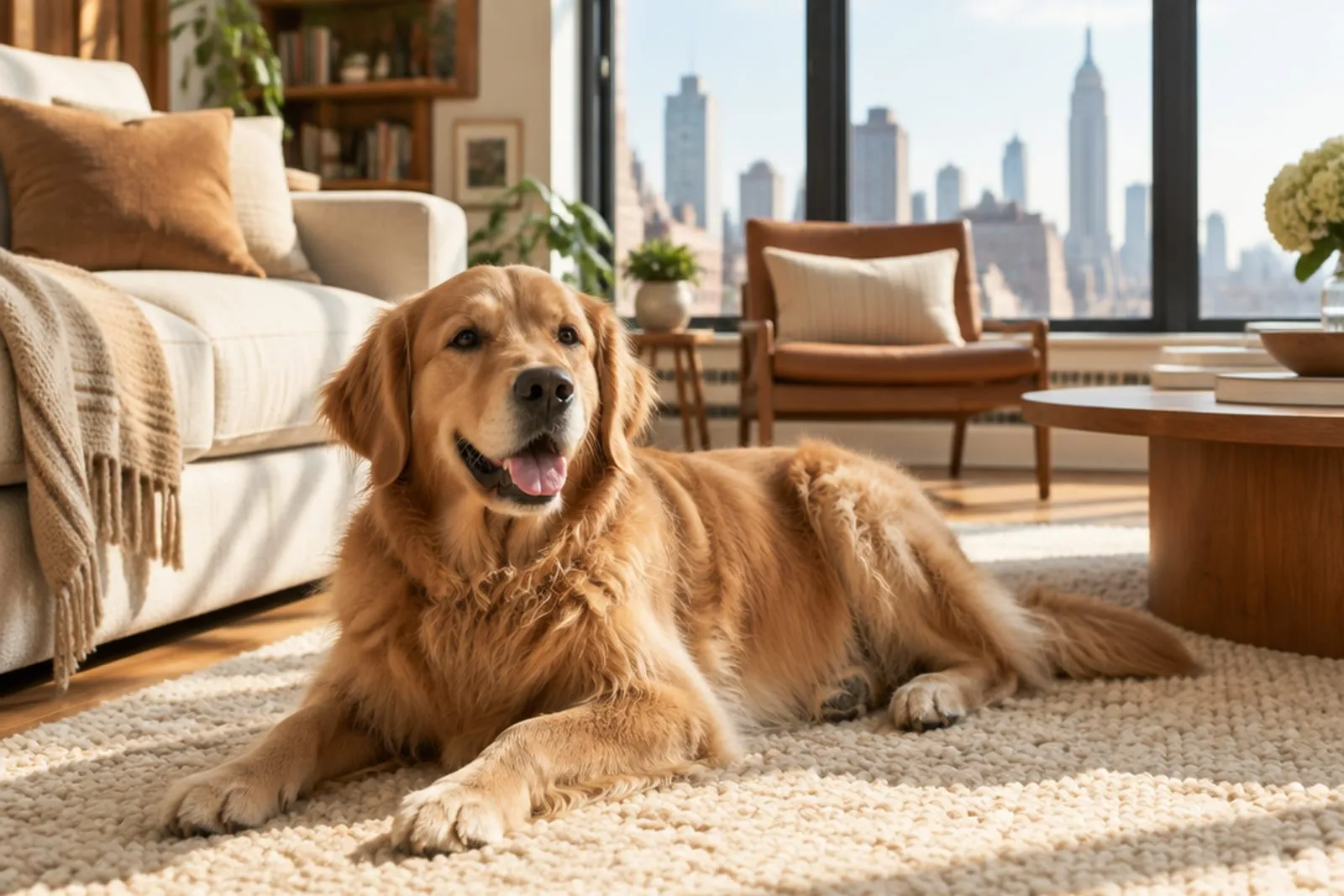
Most of this project tells readers they need to be home for pickup. In an LIC tower, often you do not — but the details matter and buildings vary more than people expect.
Sometimes, and it is worth asking rather than assuming. A rolled 9×12 is heavy, long, and does not fit a package room — many buildings that happily take parcels will decline a rug for exactly that reason. Buildings with a receiving or storage room are more likely to say yes.
Less often. Most buildings will not hand your property to a third party without you present or an explicit written authorisation. Ask your management office what they need — usually an email naming the company and the date.
Most new LIC buildings require the freight elevator to be reserved, sometimes days ahead, and restrict it to weekday hours. This, not the cleaner's schedule, is usually what determines your pickup window. Book the elevator first, then the cleaner.
Certificates of insurance are standard in these buildings and the process is routine — any company working LIC regularly will have one on file or produce it within a day.
Move-in and move-out windows in new buildings are often strict and separately booked. If a rug is arriving as part of a move, it competes for the same slot.
Floor-covering requirements. Many newer LIC buildings require a percentage of floor area to be covered for sound. What that means when a rug goes out for two weeks is covered on the DUMBO page.
Over 3,000 units and the largest public housing complex in North America. Vendor access rules are set by NYCHA rather than a private managing agent — check with your management office before scheduling and give the company clear entry instructions.
The historic district here preserves 19 nineteenth-century townhouses — a small pocket of stoop-and-staircase housing amid the towers. Access there is as in brownstone Brooklyn: be home, give your floor.
LIC remains a working manufacturing centre, and Silvercup Studios and MoMA PS1 sit alongside the new towers. Commercial and production work has its own scheduling; see commercial cleaning.
Several of the plants that wash New York's rugs are in or near LIC, which usually means the fastest turnaround in the city. Drop-off is sometimes possible — call first, since these are working facilities. See the Queens guide and, on drop-off etiquette, Greenpoint.
Mostly a DIY job; worth outsourcing for large rugs or persistent mildew.
In-plant, pH-neutral.
Wall-to-wall in apartments and offices, on-site.
Immersion at a plant, not surface treatment.
Queens rates, in line with Brooklyn and well below Manhattan.
| Rug type | Per sq ft | 6×9 (54 sq ft) | 8×10 (80 sq ft) |
|---|---|---|---|
| Synthetic | $3 – $6 | $162 – $324 | $240 – $480 |
| Wool | $4 – $7 | $216 – $378 | $320 – $560 |
| Persian / Oriental | $5 – $8 | $270 – $432 | $400 – $640 |
Minimum service charge is $150 to $250, and most companies include free pickup and delivery. Outdoor rugs are usually not worth professional cleaning unless they are large or genuinely mildewed — the minimum charge alone often exceeds what the rug cost. Full breakdown on the rug cleaning cost calculator.
Compare the same job, not three different scopes
Describe the rug or rooms, access and treatments once, then compare written, all-in quotes.
Local pricing
The rate card is the same everywhere in Queens. What moves your total in Long Island City is the building it comes out of.
Stair, minimum and access figures are the citywide ranges from the RugRate price reference, not quotes from any company.
11101 and 11109 principally, covering Long Island City from Newtown Creek north toward Astoria along the East River. 11101 is shared with Astoria.
Usually yourself, and it is straightforward. Sweep or vacuum off loose debris, hose both sides down, use a mild detergent and a soft brush — nothing harsh and no bleach on a coloured rug — then rinse thoroughly, since residue attracts dirt. Dry it vertically, hung over a railing rather than flat, until both faces are completely dry. Avoid a pressure washer, which forces the weave apart and leaves the rug fraying and shedding.
Both come from the same cause: the rug has been left flat and water is trapped underneath, unable to drain or dry. Mildew grows on the rug's underside, and the surface below stains — a dark rectangle on decking or pavers that can be very hard to remove. The fix is a habit rather than a product: lift the rug every few weeks in warm weather and after heavy rain, hang it to dry both faces, and sweep underneath. Use an open-mesh outdoor rug pad that lets water pass, not a solid indoor pad.
You can, but it shortens its life considerably even though it is technically weatherproof. Better to clean it, dry it completely, roll it and store it indoors. A rug put away damp comes out mouldy, so the drying step is the one that matters.
Usually not. The minimum service charge of $150 to $250 often exceeds what the rug cost, and a hose and an afternoon does the job. It becomes worth it for a large rug you cannot physically manage, ground-in soil that will not shift, or mildew that persists after washing and thorough drying.
No, not a wool or hand-knotted one, even under cover — sun, damp and insects will destroy it. The reverse works fine: an indoor-outdoor rug used indoors is durable and easy to clean, though it will not feel or wear like wool.
Often not, but confirm rather than assume. Some buildings will accept a rug on delivery, though a rolled 9×12 does not fit a package room and many buildings that take parcels will decline one — buildings with a receiving or storage room are more likely to help. Releasing a rug for collection is harder; most will not hand your property to a third party without you present or written authorisation naming the company and date. Ask your management office what they need.
Almost certainly. Most new LIC buildings require the freight elevator to be reserved, sometimes days in advance, and restrict it to weekday hours. That, rather than the cleaner's availability, usually determines your pickup window — so book the elevator first and the cleaner second.
Usually. Several of the plants that wash New York's rugs are in or near LIC, so a rug collected here crosses no bridges in either direction, which frequently takes days off the standard five-to-fourteen-day turnaround.
Yes. Vendor access rules are set by NYCHA rather than a private managing agent and differ from a condo's, so check with your management office about contractor access before scheduling and give the company clear entry instructions.
Queens rates, in line with Brooklyn and well below Manhattan: roughly $4 to $7 per square foot for wool and $5 to $8 for Persian or Oriental, with a $150 to $250 minimum. An 8×10 wool rug typically runs $320 to $560.