
PureGreen Carpet and Rug Cleaning
- Area rug cleaning
- Oriental and Persian rug cleaning
- Rug repair
- Carpet cleaning
Staten Island · Todt Hill
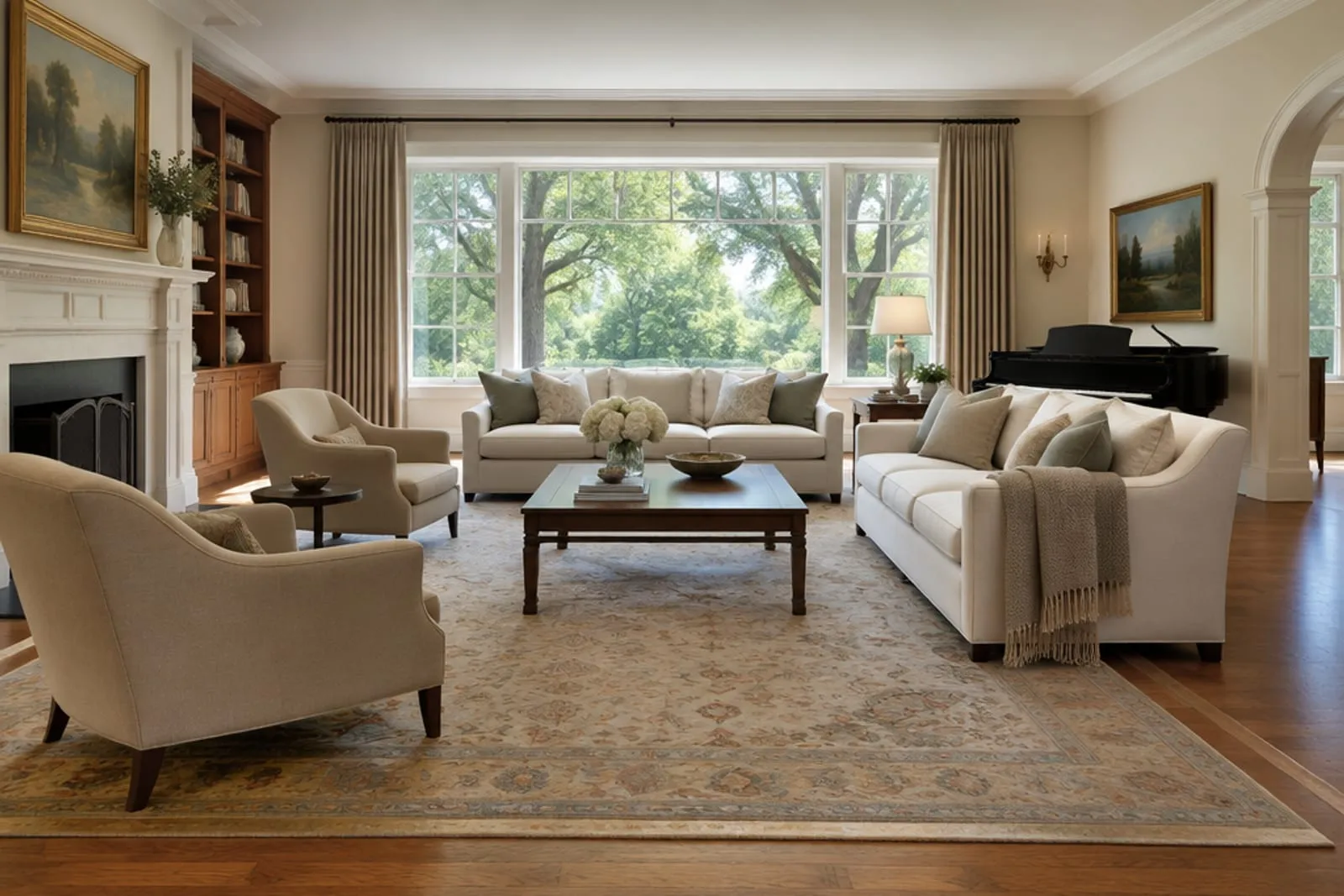
Todt Hill is 401 feet up — the highest natural point in the five boroughs, and the highest elevation on the entire Atlantic coastal plain from Florida to Cape Cod. The summit is woodland inside the Staten Island Greenbelt, the hill is serpentine rock, many of the streets have no sidewalks, and the houses sit on large lots with a great deal of glass and a great deal of light.
These companies list Staten Island in their service area. Confirm they cover your Todt Hill address when you call.
Ratings are each platform’s own figures, linked to the listing. Details come from each company’s website; RugRate has not yet verified these companies.
It is also a long-tenure neighborhood. Across Todt Hill, Emerson Hill, Lighthouse Hill and Manor Heights, the largest age group is 55 to 74. Formal rooms, furniture that has been in the same position for years, and rugs that were bought a long time ago and are worth more than most people realise.
Which sets up the specific problem of a big house: there is a lot of rug that nobody looks at. The strip along the window. The third that lives under the sideboard. The guest room used twice a year.
Both of the slow disasters that destroy good rugs happen exactly there. Neither is a stain. Neither announces itself. And by the time either is visible, it is permanent.
Companies serving Todt Hill and Emerson Hill are listed below, and you can get quotes.
Staten Island rates. Per square foot, in-plant washing:
| Rug type | Price per sq ft | 8×10 rug (80 sq ft) | 9×12 rug (108 sq ft) |
|---|---|---|---|
| Synthetic (polypropylene, nylon) | $3–6 | $240–480 | $324–648 |
| Wool | $4–7 | $320–560 | $432–756 |
| Persian / Oriental hand-knotted | $5–8 | $400–640 | $540–864 |
| Silk or silk-blend | $6–10 | $480–800 | $648–1,080 |
Minimum service charge: $150–250 per pickup.
Relevant add-ons for the rugs in this neighborhood:
| Service | Typical price |
|---|---|
| Moth treatment | $20–50 per rug |
| Binding or serging repair | $3–10 per linear foot |
| Storage | $20–60 per rug per month |
| Reweaving and restoration | Quoted individually — see below |
$1–4 per square foot, $50–150 per room, stairs $2–5 per step or $30–80 per flight.
Repairing moth damage on a hand-knotted rug is skilled hand work priced by the hour or by the square inch, and on a serious area of loss it can approach or exceed what the rug is worth. Get the repair quoted against a realistic idea of the rug's value before committing — a good cleaner will tell you when a repair does not make economic sense, and that conversation is worth having up front.
The adult moths people occasionally see flying are not the problem, and this surprises almost everyone: adult clothes moths do not eat anything. The damage is done entirely by the larvae, and the larvae are somewhere you are not looking.
They want darkness, stillness and no disturbance. In a house that means
Pull back a corner and look for
If you find any of this, look at every wool rug in the house, not just that one.
Clothes-moth larvae eat protein fibre — wool, silk, fur, feathers, hair. They do not eat polypropylene, polyester or nylon, so an ordinary synthetic rug is not at risk in the same way. A wool-synthetic blend is, and a heavily soiled synthetic can be grazed for the residue in it rather than the fibre.
Perspiration, food residue, pet traces and general soil all make a rug more attractive, which is the mechanical reason behind the advice further down.
Fibre identification is covered on the Tribeca page.
Works
Does not reliably work
Pleasant, popular, and not a treatment for an established infestation.
Putting the rug outside does not reliably kill larvae, and prolonged sun does the damage described in the next section.
The temperatures and durations required are not what a domestic freezer achieves with a rolled rug.
Surface vacuuming alone, once larvae are established at the base of the pile.
The stored-rug version of this problem — a rolled rug in a basement, which is a different and even better habitat — is on the Sunnyside page.
This is the part that connects the whole page.
Larvae prefer soiled wool. A full immersion wash removes the soil that attracts them and flushes out eggs and larvae from the base of the pile, which is where they live and where no vacuum reaches.
So washing a valuable wool rug every three or four years is not really maintenance in the cosmetic sense. It is the most effective moth prevention available, and it happens to also make the rug look better. In a house with several good rugs in low-traffic rooms, that is the argument for cleaning them on a schedule rather than when they look dirty — because a rug in a formal dining room may never look dirty and may still be quietly feeding something.
A house on the highest point of the Atlantic coastal plain, on a large lot with no neighbouring building casting a shadow, gets a great deal of direct light. That light does two things to a rug, and neither can be undone.
Ultraviolet light degrades dye molecules, so colours lighten and shift — reds and blues typically go first and most visibly.
Prolonged exposure degrades wool itself, and silk far faster. A sunlit strip of a silk rug can become brittle as well as pale.
Re-dyeing a faded hand-knotted rug is specialist restoration work, rarely economic, and rarely invisible. Fading is the one form of rug damage with no professional answer, which is why the whole of this section is about prevention.
Two things get confused, and telling them apart matters before anyone concludes a rug is damaged.
Abrash is natural colour variation in a hand-dyed rug — bands or streaks of slightly different tone running horizontally across the weave, caused by different dye lots as the weaver worked up the rug. It was there from new. It is a mark of hand-dyeing, it is generally considered desirable, and it runs across the rug in bands following the weave.
It is strongest where the sun actually falls, it fades gradually toward the shade, and it very often shows a sharp line where a piece of furniture or a shadow sat.
Look at a part of the rug that has never been exposed — under a sofa, under a table — against the part in the light.
Everything above reduces to one habit, and it is free.
Twice a year, go into the rooms you do not use, and move things. Pull the furniture off the rugs. Lift the edges. Vacuum underneath. Rotate each rug. Open the curtains and look at the colour against a shaded part. Put it all back.
Half an hour, twice a year, in a house with six or eight good rugs, is worth more than any product, any treatment and most professional services — because both of the things that destroy rugs in a house like this depend entirely on nobody looking.
And the finding matters as much as the prevention. Moth damage found in month four is a treatment. Found in year three it is a reweaving quote. Fading caught in the first year is a rug that gets rotated. Caught in year five it is a rug with a permanent line across it.
Compare the same job, not three different scopes
Describe the rug or rooms, access and treatments once, then compare written, all-in quotes.
Local pricing
The rate card is the same everywhere in Staten Island. What moves your total in Todt Hill is the building it comes out of.
Stair, minimum and access figures are the citywide ranges from the RugRate price reference, not quotes from any company.
Look under the furniture and under the rug's edges, not at the open floor. The signs are grazed patches where the pile has been eaten down to the foundation so the woven base shows through, fine sandy grit on the rug or the floor beneath it, silken tubes or webbing stuck to the pile, and small cream-coloured larvae a few millimetres long. The adult moths you occasionally see flying do not eat anything — all the damage is done by larvae.
No. Clothes-moth larvae eat protein fibre — wool, silk, fur, feathers — so polypropylene, polyester and nylon rugs are not at risk in the same way. Wool blends are, and a heavily soiled synthetic can be grazed for the residue in it rather than the fibre.
Not reliably, and not at all once an infestation is established. The same goes for home freezing and for putting the rug in the sun, which does not dependably kill larvae and causes fading. What works is disturbance — moving furniture and vacuuming underneath twice a year — plus a professional immersion wash and, where needed, moth treatment at $20–50 per rug. Pheromone traps are useful as a detector, not a cure.
Because larvae prefer soiled wool, and a full immersion wash removes both the soil that attracts them and the eggs and larvae living at the base of the pile where no vacuum reaches. Washing a valuable wool rug every three or four years is the most effective moth prevention available. A rug in a formal room may never look dirty and may still be quietly feeding something.
Yes, permanently. Ultraviolet light breaks down dye molecules so colours lighten and shift, and prolonged exposure weakens the fibre itself — wool slowly, silk much faster. No cleaning restores faded colour, and re-dyeing a hand-knotted rug is specialist work that is rarely economic and rarely invisible.
Rotate it 180 degrees every six to twelve months — free, two minutes, and by far the most effective step. It does not prevent fading; it spreads it evenly, which is the difference between a rug that has aged and a rug with a pale stripe down one side. Add UV-filtering window film, which substantially reduces but does not eliminate fading, and shade the window during the hours the sun falls directly on the rug. For a genuinely valuable rug in a very bright room, the real answer is a different room.
Possibly not. Abrash is natural colour variation in a hand-dyed rug, caused by different dye lots as the weaver worked, and it runs in bands horizontally across the weave. It was there from new and is generally considered desirable. Fading follows the light rather than the weave — strongest where the sun falls, fading gradually toward the shade, and often with a sharp line where furniture sat.
It depends on the rug. Reweaving is skilled hand work priced by the hour or the square inch, and on a serious area of loss it can approach or exceed what the rug is worth. Get the repair quoted against a realistic idea of the rug's value first — a good cleaner will say when a repair does not make economic sense.
About $3–6 per square foot for synthetics, $4–7 for wool, $5–8 for hand-knotted Persian and Oriental rugs and $6–10 for silk, with a $150–250 minimum per pickup. Moth treatment runs $20–50 per rug and storage $20–60 per rug per month.