
PureGreen Carpet and Rug Cleaning
- Area rug cleaning
- Oriental and Persian rug cleaning
- Rug repair
- Carpet cleaning
Manhattan · Flatiron–Gramercy
Rug and carpet cleaners serving the Flatiron District and Gramercy — from 14th Street and Union Square up to 23rd Street and Madison Square, east to First Avenue, in ZIP codes 10010, 10003 and 10016. These are two very different districts sharing a border: Flatiron is an office and loft-conversion neighborhood where most of the demand is workplace carpet and conference-room rugs, while Gramercy is a quiet residential enclave of prewar co-ops and nineteenth-century brownstones around a private park. Cleaning an office? Start with workplace and office cleaning below. Living around Gramercy Park? See Gramercy residences.
These companies list Manhattan in their service area. Confirm they cover your Flatiron–Gramercy address when you call.
Ratings are each platform’s own figures, linked to the listing. Details come from each company’s website; RugRate has not yet verified these companies.
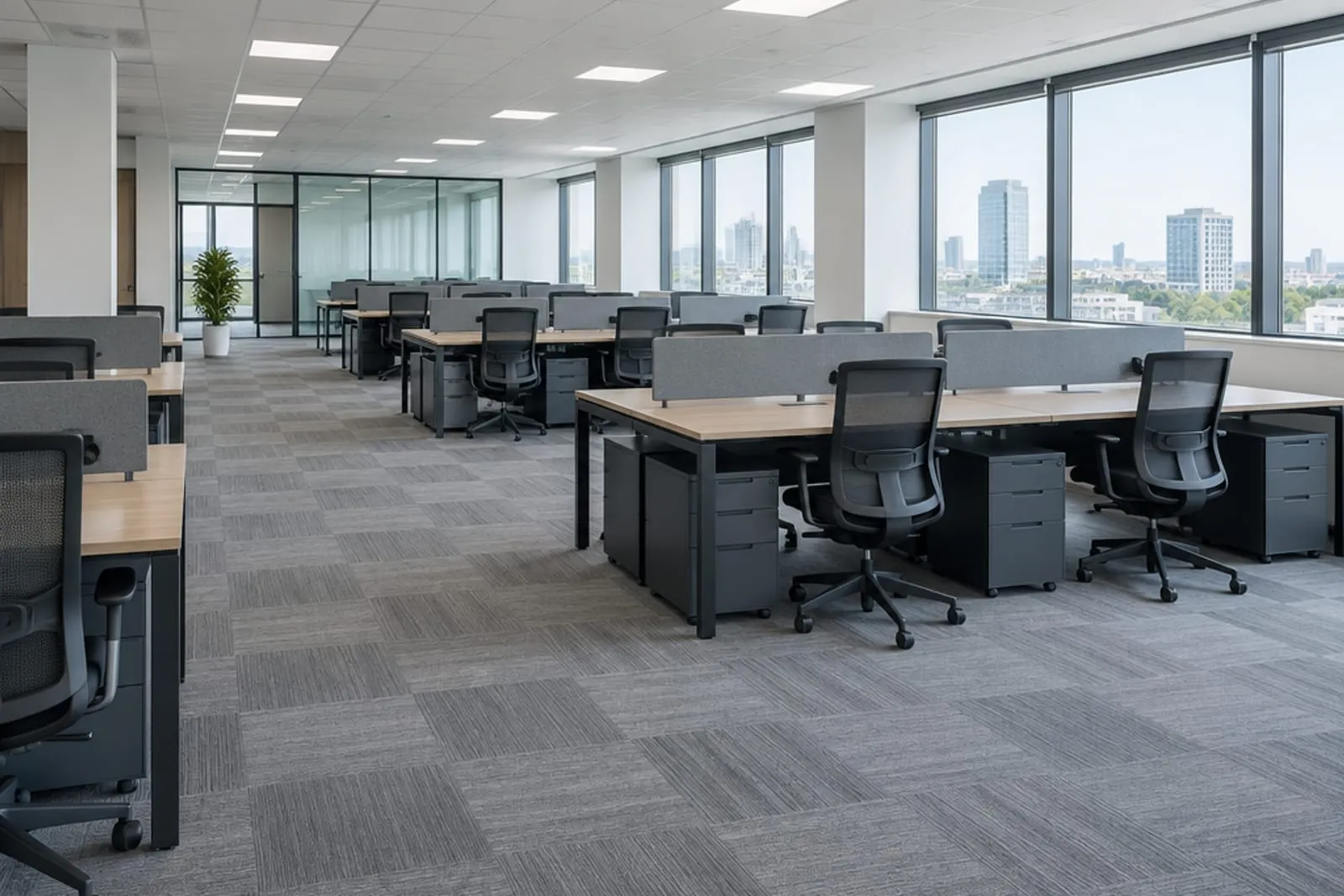
The Flatiron District was the birthplace of Silicon Alley and remains a dense office neighborhood — technology companies, publishers, advertising agencies, and the loft-conversion workspaces they occupy. Most buildings here are older three-to-six storey structures alongside taller ones, and much of the office stock sits in converted commercial buildings with big open floors.
Workplace floor care is a different service from residential rug cleaning, and the differences are practical.
Offices cannot close, so cleaning happens overnight, at weekends, or over holiday periods. The company needs staff willing to work those hours and building access arranged in advance — freight elevator, security sign-in, and often an escort. Confirm all of it before booking; a residential-focused shop frequently cannot do it.
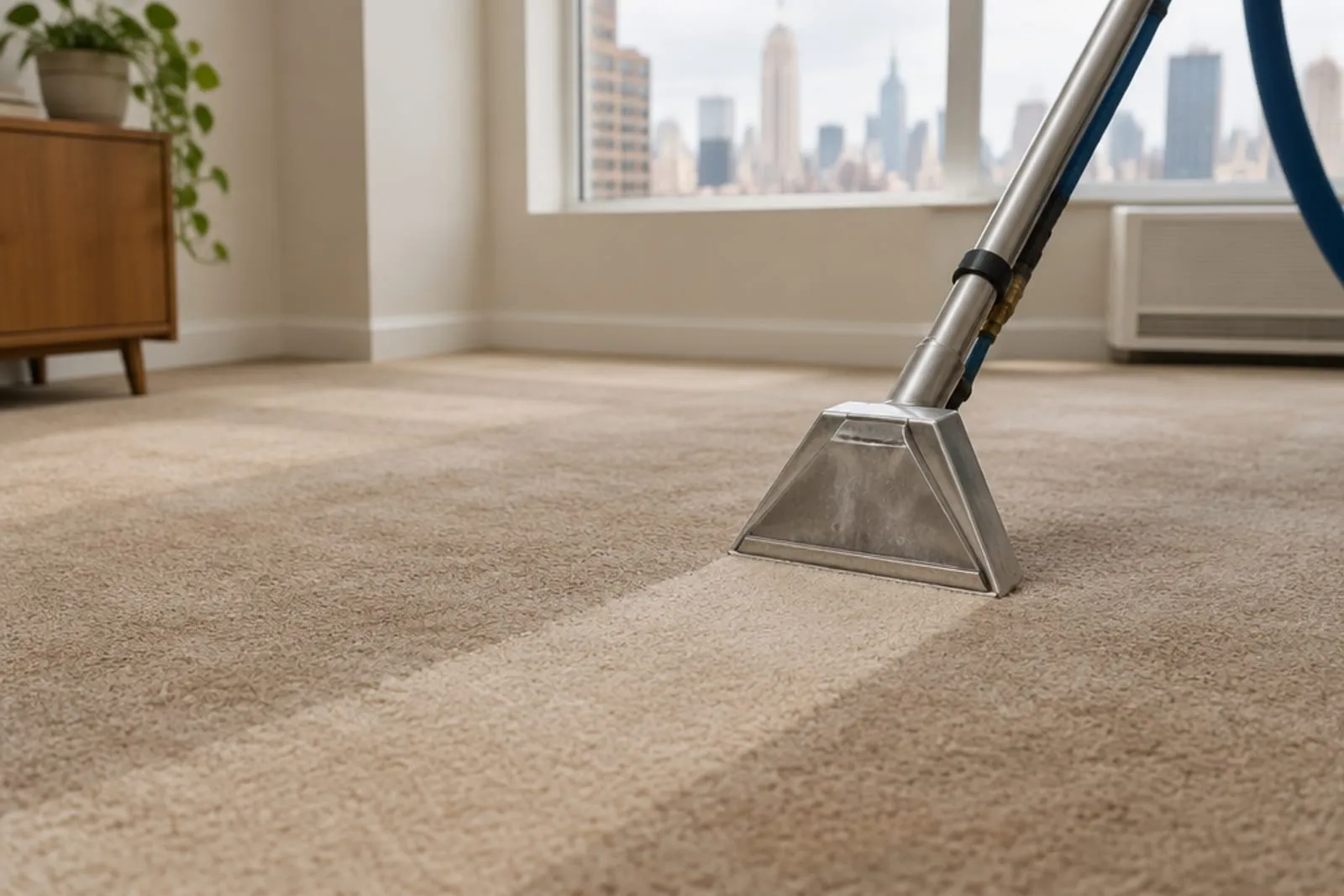
Most Flatiron offices are carpeted throughout, cleaned on-site by hot water extraction or low-moisture encapsulation at roughly $1 to $4 per square foot. Encapsulation is usually the better fit for a working office: faster drying, less disruption, and suited to maintenance cleaning on a schedule.
Desks, monitors, and floor boxes complicate access, and moisture near cabling is a real consideration. Experienced commercial crews plan around it. This is worth raising explicitly when you get quotes.
Offices soil predictably and continuously, so quarterly or half-yearly maintenance holds appearance far better and costs less over time than an annual rescue. If you manage a floor, negotiate a schedule rather than calling when it looks bad.
Start at commercial rug and carpet cleaning, or see commercial cleaning in Manhattan.
Almost nobody writes about this, and in an office it is the dominant form of wear.
A rolling desk chair concentrates the weight of a seated person onto a handful of small hard castors, and then moves it back and forth over the same square metre thousands of times a year. On carpet the result is a visible worn track and crushed pile within the chair's radius. On a rug — particularly a hand-knotted or high-pile one — it is worse: castors abrade the pile at the tips and can catch and pull individual knots or loops.
What actually helps
Once the pile is abraded, cleaning will not restore it. Washing removes soil and lifts crushing, but fibre that has been ground away is gone. Worn areas can sometimes be rewoven — see rug repair — but prevention is dramatically cheaper. If you are furnishing an office, sort this out before the rug goes down rather than after.
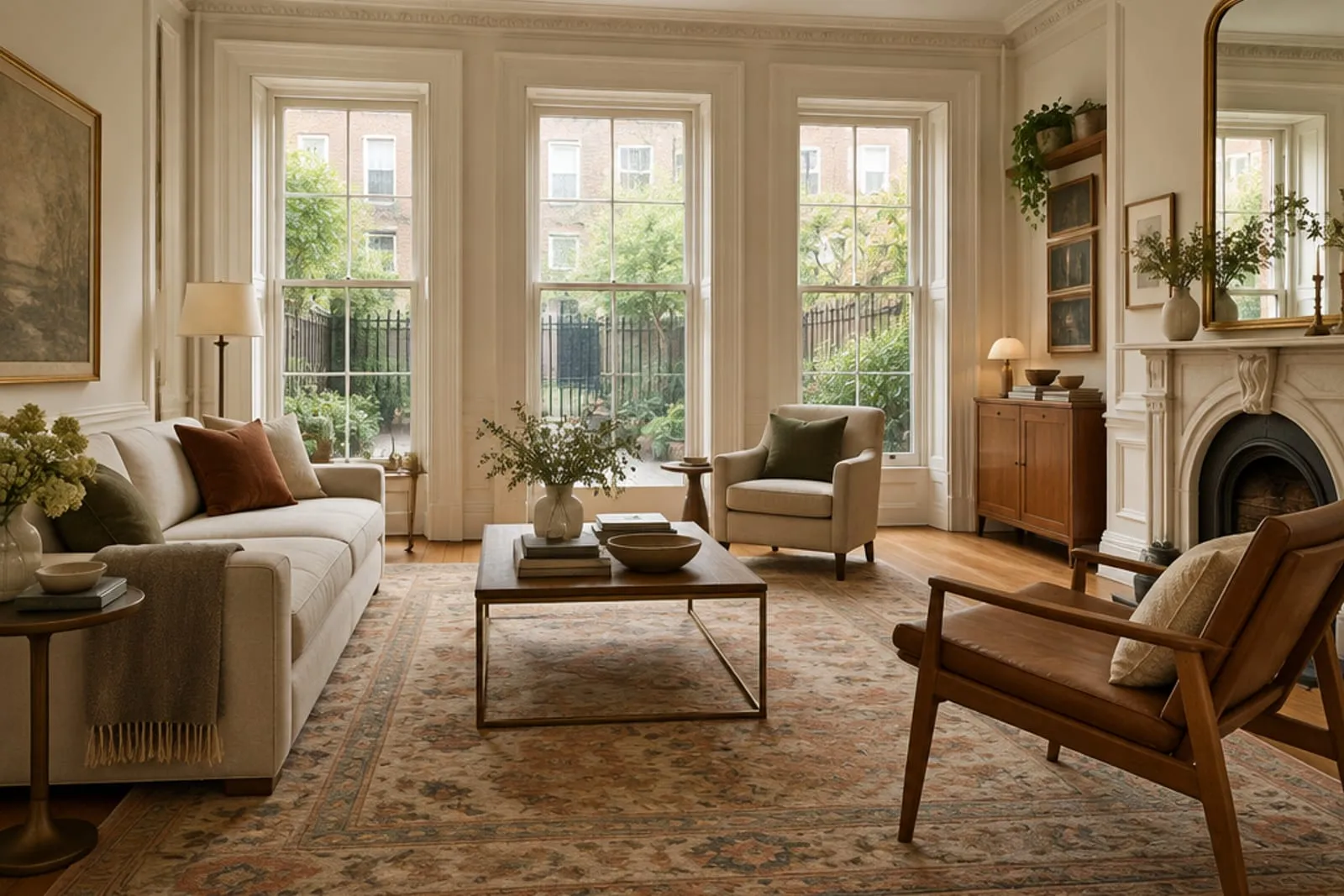
Gramercy is a different proposition entirely. The neighborhood is built around one of only two private parks in New York City, laid out by Samuel Ruggles, who bought the land in 1831 and deeded it to trustees in 1832. Thirty-nine surrounding lots carry key access, held by owners paying annual assessments, along with the Players and the National Arts Club.
The Gramercy Park Historic District was designated in 1966 and extended in 1988, protecting Greek Revival, Italianate and Gothic Revival architecture: nineteenth-century brownstones, carriage houses, and two of the city's earliest apartment buildings from 1883 and 1905.
What that means practically
Buildings around the park are old, small, and often closely held, with vendor requirements set building by building rather than by a large managing agent. Certificates of insurance are usually required; the specifics vary more than in a large complex. Ask your board contact or super directly.
No elevator, narrow staircases, a stoop. The access considerations are effectively those of the West Village — give your floor and describe the staircase when you request a quote.
Long-tenure households in prewar apartments around the park hold a high proportion of hand-knotted, Persian, Oriental and antique rugs. That argues for in-plant washing, colourfastness testing, and a company with genuine hand-knotted experience rather than a general carpet cleaner. The Upper East Side page covers the antique considerations in detail; they apply here.
Just east of Gramercy, and one of the largest apartment complexes in the country. Single management across thousands of units means one established vendor process, set access rules, and cleaning companies that service it regularly and already hold certificates. If you live there, ask the management office which cleaners are on file — it is faster than starting cold. Most companies listed on this page serve it.
Offices, coworking, conference rooms. Overnight and weekend scheduling.
Wall-to-wall and carpet tile, on-site, $1 to $4 per square foot.
Quoted after inspection, never by the square foot sight unseen.
Castor wear, worn traffic lanes, frayed edges.
Office seating and residential furniture; worth bundling into one visit.
Immersion at a plant, not surface treatment.
| Service | Typical cost |
|---|---|
| Office carpet, on-site extraction or encapsulation | $1 – $4 per sq ft |
| Typical one-bedroom, wall-to-wall | $200 – $400 |
| Wool rug, in-plant | $5 – $8 per sq ft |
| Persian / Oriental, in-plant | $6 – $9 per sq ft |
| Silk, in-plant | $7 – $12+ per sq ft |
| Antique | Quoted after inspection |
| 9×12 wool rug | $540 – $864 |
| Minimum service charge | $150 – $250 |
Most companies include free pickup and delivery within Manhattan. Commercial work is usually quoted per square foot with an out-of-hours premium. Full breakdown on the rug cleaning cost calculator.
Compare the same job, not three different scopes
Describe the rug or rooms, access and treatments once, then compare written, all-in quotes.
Local pricing
The rate card is the same everywhere in Manhattan. What moves your total in Flatiron–Gramercy is the building it comes out of.
Stair, minimum and access figures are the citywide ranges from the RugRate price reference, not quotes from any company.
Primarily 10010 and 10003, with 10016 at the northern and eastern edges. The area runs from 14th Street and Union Square north to 23rd Street and Madison Square, west to Sixth Avenue and east toward First Avenue.
Yes, and it is how nearly all of it is done. Work is scheduled overnight, at weekends, or over holidays, and low-moisture encapsulation is generally the better method for a working office because it dries fast and disrupts less than hot water extraction. You will need to arrange building access, freight elevator use, and often a security escort in advance — confirm the company can work those hours before booking.
Roughly $1 to $4 per square foot depending on method and condition, usually with a premium for out-of-hours work. Maintenance schedules cost less over time than occasional deep cleans, because office carpet soils continuously and predictably rather than in incidents.
Cleaning will lift crushing and remove soil, but fibre that has been abraded away by castors cannot be restored by washing. Worn areas can sometimes be rewoven, which is skilled hand work quoted after inspection. Prevention is far cheaper: a hard chair mat is the single most effective fix, followed by soft carpet-rated castors, and ideally not placing a hand-knotted rug under a rolling chair in the first place.
Almost certainly, though the specifics vary more here than in a large managed complex. Buildings around the park are old, small, and often closely held, with vendor requirements set building by building rather than by a large managing agent. Ask your board contact or super for the exact wording and coverage limits, then confirm the company can meet them before scheduling.
Not usually, but tell the company when you request the quote rather than on the day. Give your floor and describe the staircase, including any turns. A stair carry is real labour that companies price differently, and disclosing it upfront gets it into the written estimate instead of renegotiated at your door.
Most do. It sits just east of Gramercy and is one of the largest apartment complexes in the country, with single management across thousands of units — which means one established vendor process and a set of cleaning companies that already hold certificates of insurance on file. Ask the management office which cleaners are approved; starting there is faster than starting cold.
It depends on the rug. Inexpensive synthetic and machine-made rugs can reasonably be cleaned on-site along with the surrounding carpet. Wool, silk, and hand-knotted rugs should be collected and washed in-plant, which means being without them for five to fourteen days — schedule that around your calendar rather than discovering the timeline afterwards.
Within the Manhattan range: roughly $5 to $8 per square foot for wool and $6 to $9 for Persian or Oriental, with a $150 to $250 minimum. A 9×12 wool rug typically lands between $540 and $864. Antique rugs are quoted after inspection rather than by the square foot.
No. The district was designated in 1966 and extended in 1988, and it genuinely constrains exterior work on the surrounding buildings — but the Landmarks Preservation Commission does not regulate removing a rug and bringing it back. Your building's own vendor rules are what matter.