
PureGreen Carpet and Rug Cleaning
- Area rug cleaning
- Oriental and Persian rug cleaning
- Rug repair
- Carpet cleaning
Manhattan · Harlem
Rug cleaners serving Harlem — from 110th Street north to 155th, across Central, West and East Harlem, in ZIP codes 10026, 10027, 10030, 10031, 10035, 10037 and 10039. Rug cleaning in Harlem is shaped by the housing: this is one of the largest concentrations of intact nineteenth-century brownstones in New York, many of them owned and lived in as whole houses rather than divided into apartments, which means several rugs per household rather than one.
These companies list Manhattan in their service area. Confirm they cover your Harlem address when you call.
Ratings are each platform’s own figures, linked to the listing. Details come from each company’s website; RugRate has not yet verified these companies.
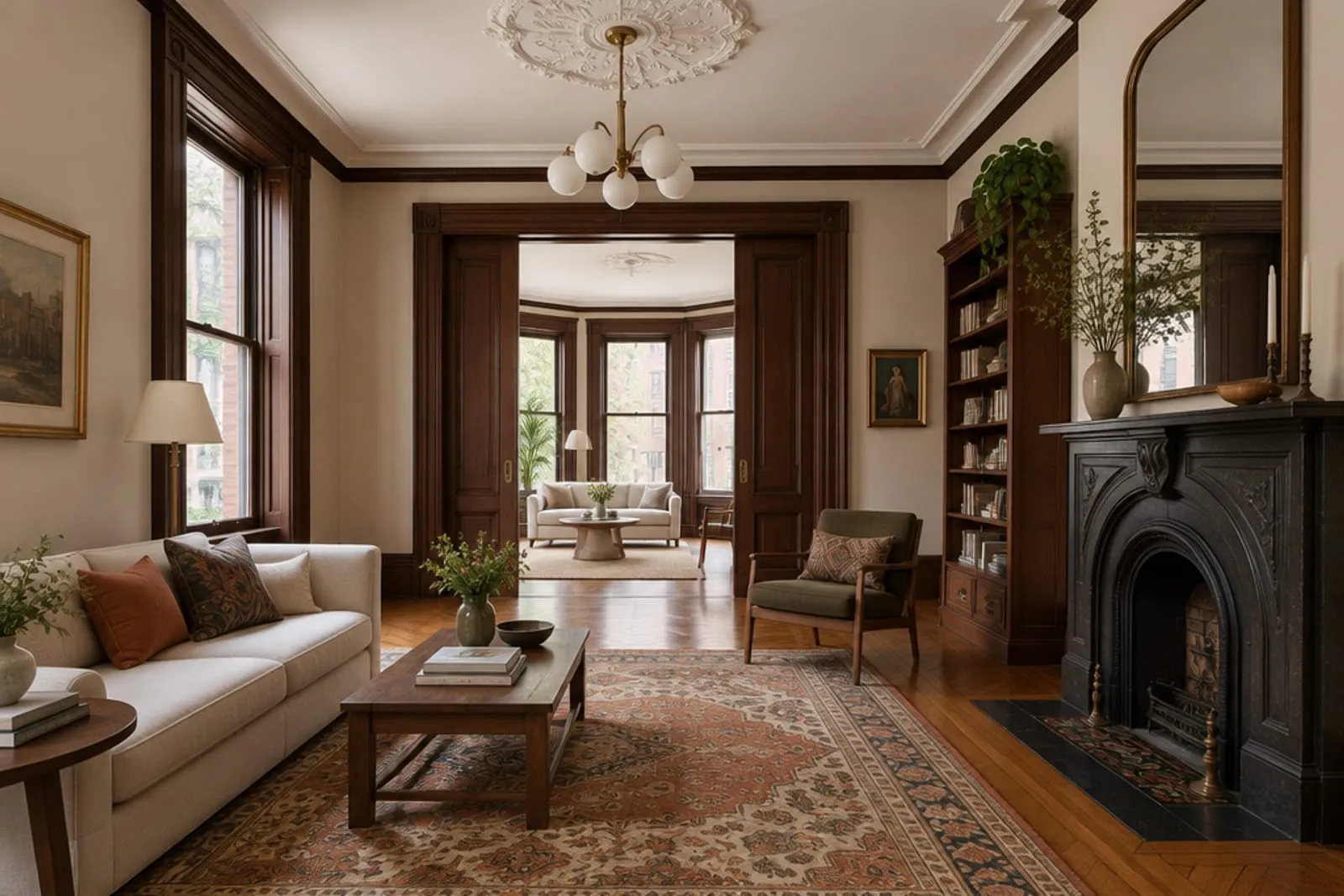
A Harlem brownstone is not an apartment. A typical rowhouse here runs four or five storeys with a parlour floor, a dining room, and bedrooms above — and where the house has stayed whole rather than being subdivided, that is four, five, or six significant rugs under one roof.
That changes the economics entirely, and in your favour.
Nearly every NYC cleaner sets a minimum service charge of $150 to $250 regardless of rug size. Sent individually, six rugs could mean six minimums. Sent together, it is usually one. That difference alone can run into several hundred dollars.
Collection and delivery are labour, and companies price a single visit far better than repeated ones.
A six-rug household job is a good day's work for a shop and most will price it accordingly — but only if you ask. Say how many rugs and roughly what sizes when you request quotes.
You will be without all of them for five to fourteen days at once. Plan it for a period when the house can manage bare floors — and note that a whole-house job is one of the few situations where paying for expedited service can genuinely be worth it.
If bare floors across the whole house is not workable, split into two batches by floor rather than sending one rug at a time — two minimums beats six.
Harlem has an active brownstone restoration market, and renovation produces a soiling problem that most people underestimate and most cleaners are never told about in advance.
Plaster, joint compound, and masonry dust are fine, abrasive, and alkaline. The particles are far smaller than household soil, so they travel further and settle deeper into a rug's foundation, and they keep circulating for weeks after the work finishes as the building settles and air moves. Wool is particularly vulnerable: the alkalinity is bad for the fibre, and the abrasiveness cuts it in exactly the way ordinary grit does, only faster.
Fine dust sits below the level a domestic vacuum reaches, and a household machine often redistributes it rather than removing it. This is a job for proper mechanical dusting followed by a full wash.
It changes the dusting time, sometimes the pre-treatment, and the expectation of how many passes the rug needs. A shop that knows in advance will do it properly the first time.
Get rugs out of the house before the work starts. Cleaning a rug after a renovation is a real cost; having it professionally cleaned and stored during the work — typically $20 to $60 a month — is often cheaper and always better for the rug. If the renovation has already happened, wash sooner rather than later, because the dust is doing damage every day it sits in the pile.
The St. Nicholas Historic District, designated a New York City landmark in 1967 and listed on the National Register in 1975. The houses were built between 1891 and 1893 by developer David H. King Jr., with three architectural firms working in different styles — James Brown Lord, Bruce Price and Clarence Luce, and Stanford White of McKim, Mead & White.
A practical detail unique in Manhattan: Strivers' Row was built with gated rear service alleys, originally for stabling and deliveries — some gates still carry their "Walk Your Horses" signs. If you live here, rear alley access can make a pickup considerably easier than the front stoop. Mention it when you book; most companies will not know to ask.
Late nineteenth-century rowhouses and apartment buildings around Marcus Garvey Park, with a high proportion of whole-house ownership and ongoing restoration. Stoop access, no elevators, and generally no doorman — so you need to be home, and should give your floor when requesting a quote.
An unusual row of houses with wooden porches and front gardens, rare in Manhattan. Front access is straightforward; the porches are the distinguishing feature and a courtesy worth noting to a crew carrying a heavy rug.
Rowhouses and prewar apartment buildings on the higher ground above 145th. A mix of whole houses and apartments, with some elevator buildings — access varies more here than in Central Harlem.
A different housing profile: substantial public housing, postwar towers, and tenement-stock walk-ups alongside rowhouses. Access ranges from straightforward in managed buildings to stairs-only in walk-ups. Rugs skew newer and more often synthetic, which usually means a simpler and cheaper job.
Where you are in a managed building, check vendor access requirements with your management office before scheduling — NYCHA developments have their own rules, which are not the same as a private co-op's.
Harlem has a dense concentration of historic congregations and community institutions, many in landmarked buildings, and their floor coverings are a genuine specialism.
Sanctuary carpet, aisle runners, chancel and altar rugs, and community and fellowship hall floors. Some congregations hold significant older rugs that deserve the same treatment as any fine hand-knotted piece.
Work happens around services, and for most congregations that means a narrow weekday window. Plan well ahead, particularly around major religious calendar dates when the building must look its best and every other congregation wants the same week.
Aisles, entrances, and the area in front of the chancel take the traffic. Runners in those positions are cheaper to replace or rotate than to keep restoring, and rotating them regularly extends the life of everything.
Start at commercial rug and carpet cleaning and describe the building and the schedule in the notes.
The brownstone staple. In-plant, pH-neutral.
Long-tenure households and restored brownstones hold plenty of older pieces. Quoted after inspection.
Stair runners wear at the nosing, and hallway rugs fray at doorways. Binding and serging is cheap relative to replacement.
Wall-to-wall in apartments and community buildings, on-site.
Typically $20 to $60 per month, and the single best decision available to anyone about to start work on a house. Clean first, then store — a rug put away soiled attracts moths and comes out worse than it went in.
Harlem follows the Manhattan rate card. Where it can be better value is in the job itself: curb parking is usually easier than downtown, and a household with several rugs can send them together under one minimum.
| Rug type | Per sq ft | 6×9 (54 sq ft) | 9×12 (108 sq ft) |
|---|---|---|---|
| Synthetic | $4 – $6 | $216 – $324 | $432 – $648 |
| Wool | $5 – $8 | $270 – $432 | $540 – $864 |
| Persian / Oriental | $6 – $9 | $324 – $486 | $648 – $972 |
| Silk | $7 – $12 | $378 – $648 | $756 – $1,296 |
Minimum service charge is typically $150 to $250, and most companies include free pickup and delivery throughout Harlem. Full breakdown on the rug cleaning cost calculator.
The multi-rug saving is the one that matters here. Six rugs sent together at one minimum, one pickup, and a volume discount will cost substantially less than six separate jobs. Ask for the multi-rug price explicitly.
Compare the same job, not three different scopes
Describe the rug or rooms, access and treatments once, then compare written, all-in quotes.
Local pricing
The rate card is the same everywhere in Manhattan. What moves your total in Harlem is the building it comes out of.
Stair, minimum and access figures are the citywide ranges from the RugRate price reference, not quotes from any company.
Yes — effectively all of them. Nearly every NYC rug cleaning company collects citywide and includes free pickup and delivery throughout Harlem, and most of the washing anywhere in Manhattan happens at plants in Queens and Brooklyn regardless of where the customer lives. You have the same access to the same companies as anyone downtown, generally at slightly better prices.
10026, 10027, 10030, 10031, 10035, 10037 and 10039, covering Central Harlem from 110th to 155th Street, plus West Harlem — Manhattanville, Hamilton Heights and Sugar Hill — and East Harlem.
Yes, and it is the biggest saving available to you. Nearly every cleaner sets a minimum charge of $150 to $250 per job, so sending rugs individually can mean paying that minimum six times over. Sent together it is usually one minimum, one pickup, and a volume discount worth asking for directly. The trade-off is being without all of them for five to fourteen days — if that is not workable, split into two batches by floor rather than sending them one at a time.
Yes. Construction dust from plaster, joint compound and masonry is fine, abrasive and alkaline, and it settles far deeper into a rug than household soil. Domestic vacuuming does not reach it and often just redistributes it. Tell the cleaner explicitly that it is construction dust — it changes the dusting time and pre-treatment, and a shop that knows in advance will get it right first time. Wash sooner rather than later, because the dust is cutting the fibres every day it stays in the pile.
Before, ideally. Have them cleaned and stored while the work happens — storage typically runs $20 to $60 a month — which is usually cheaper than a heavy post-construction clean and far better for the rugs. If the work is already done, wash them promptly.
Mention the rear alley. Strivers' Row was built with gated rear service alleys, originally for stabling and deliveries, and they are a rarity in Manhattan. Rear access can make a pickup considerably easier than carrying a rolled rug down the front stoop, but most companies will not think to ask about it.
Not usually, but tell the company when you request the quote and give the floor. Carrying rugs down several flights is real labour and companies price it differently — disclosing it upfront gets it into the written estimate rather than renegotiated on the day. For a whole-house job, mention which floors the rugs are on.
Harlem follows the Manhattan rate card: roughly $5 to $8 per square foot for wool and $6 to $9 for Persian or Oriental, with a $150 to $250 minimum. A 9×12 wool rug typically lands between $540 and $864. Most companies include free pickup and delivery.
Often not, which is one of the practical advantages of the neighborhood. Owner-occupied brownstones generally have no vendor approval process at all. If you are in a managed apartment building or a NYCHA development, check with your management office, since those have their own requirements.
Yes, and several listed companies do this work. Sanctuary carpet, aisle runners, and hall floors are all standard. Scheduling around services is the main constraint, so plan well ahead — particularly around major dates in the religious calendar, when demand from congregations clusters.
No. Harlem has several — the St. Nicholas Historic District, Mount Morris Park, Hamilton Heights and Sugar Hill among them — and they genuinely constrain exterior work on the houses. But the Landmarks Preservation Commission does not regulate taking a rug out of a building and bringing it back.